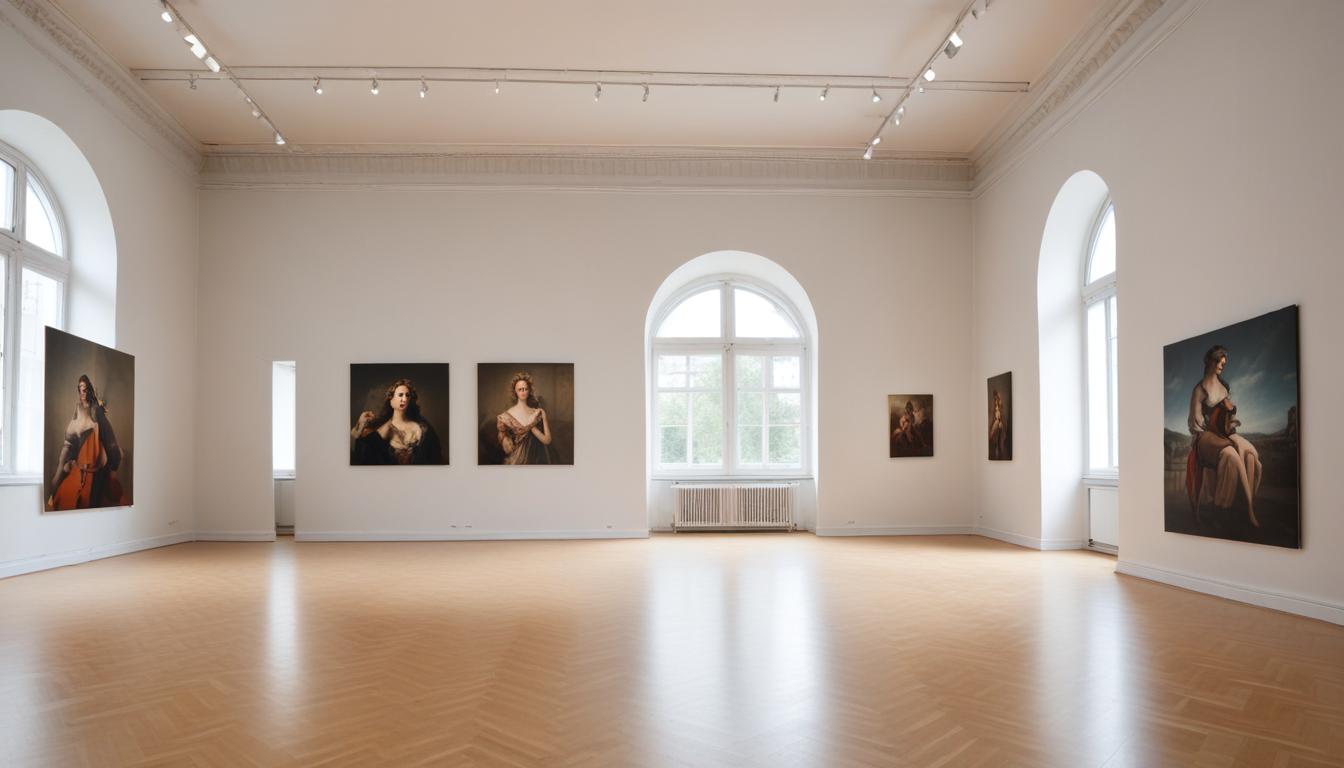
Walk from Kreuzberg to Mitte and you're traversing not just geography, but competing narratives about what Berlin means. The city's creative identity has always been forged in these tensions—between East and West, destruction and reconstruction, memory and reinvention. Today, as Berlin consolidates its position as one of Europe's most influential cultural centres, that fractured historical inheritance is reshaping everything from gallery programming to street-level activism.
The numbers tell part of the story. The Deutsches Historisches Museum attracts over 600,000 visitors annually, while smaller neighbourhood institutions like the Gedenkstätte Deutscher Widerstand (German Resistance Memorial Centre) near Tiergarten draws scholars and artists seeking nuanced narratives beyond the mainstream. Yet this abundance of historical infrastructure masks a deeper conversation happening in Berlin's creative communities about who gets to tell these stories—and whose experiences remain marginalised.
Consider the Raw-Gelände in Friedrichshain, once a locomotive repair yard, now a sprawling creative hub hosting everything from techno clubs to artist collectives. It's become emblematic of how Berlin recycles its industrial past into cultural currency. The 170,000-square-metre site represents the city's particular genius: transformation without erasure. Yet artists working there acknowledge the uncomfortable reality: gentrification follows cultural reclamation. Average rents in Friedrichshain have doubled in a decade.
This tension animates contemporary Berlin culture. At institutions like the Maxim Gorki Theatre on Mitte's Am Festungsgraben, programming deliberately centres postcolonial perspectives and migrant experiences, acknowledging that Berlin's identity cannot be constructed solely from Cold War narratives or Prussian heritage. Meanwhile, grassroots projects in Wedding and Neukölln—neighbourhoods with significant immigrant populations—are creating alternative historical archives, insisting that Turkish-German, Arab-German, and Vietnamese-German experiences are integral to Berlin's story, not peripheral to it.
The shift reflects broader demographic reality. Census data suggests over 35% of Berliners have a migration background. Yet representation in major cultural institutions remains disproportionately white and Western-focused. This mismatch is driving younger curators and artists to establish independent spaces and challenge institutional gatekeeping.
What emerges is a city consciously defining itself through contradiction. Berlin's creative identity increasingly rejects the notion of a single, coherent historical narrative. Instead, it's embracing layered, contested, sometimes conflicting interpretations—from Cold War division to postcolonial critique, from Bauhaus modernism to contemporary street culture.
This fractured approach may paradoxically be Berlin's greatest strength. In an era of culture wars and historical revisionism elsewhere, Berlin's creative sector is modelling something different: uncomfortable coexistence, permanent contestation, refusal of resolution. It's messy. It's not always profitable. But it's authentic to what this city actually is.
This article was compiled by AI from the sources linked above and screened before publishing. See our editorial standards.