Berlin's Summer Festival Circuit Reflects a City Reclaiming Its Grassroots Identity
As neighbourhood collectives replace corporate sponsors, this year's cultural calendar reveals how artists and residents are reshaping what matters in the capital.
As neighbourhood collectives replace corporate sponsors, this year's cultural calendar reveals how artists and residents are reshaping what matters in the capital.
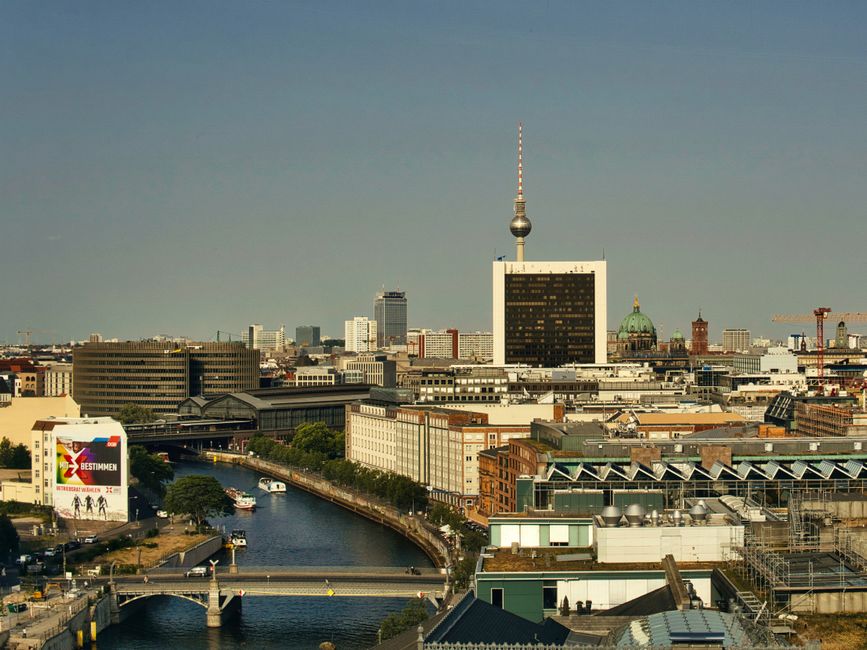
Walk through Kreuzberg on any weekend in July, and you'll encounter a cultural landscape that barely existed five years ago. The neighbourhood's festival season—anchored by events like the RAW-Gelände's Lollapalooza alternative and dozens of smaller community-run productions—tells the story of Berlin's ongoing shift away from top-down cultural programming toward grassroots momentum.
This summer, organisers estimate that neighbourhood-led festivals will draw over 400,000 visitors to Berlin's peripheries, compared to 520,000 at the city's traditional flagship events. The numbers themselves mark a quiet revolution. "We're seeing a genuine redistribution of cultural power," says the collective behind Neuköllner Sommerfestival, which has grown from a 2,000-person gathering in 2022 to an anticipated 35,000-person event across Rixdorf and Körnerpark this August. Admission remains free or €8—deliberately accessible pricing that contrasts sharply with central venues charging €45 upwards.
The movement extends across the Spree. Friedrichshain's Ostkreuz neighbourhood hosts eleven independent festivals this summer, collectively programmed by residents rather than venue directors. Pankow's Kulturbrauerei, once a corporate events space, now operates as a cooperative hub where local artists design their own calendars. Even Charlottenburg, traditionally Berlin's cultural establishment zone, has seen neighbourhood groups assert control over Charlottenburg Palace's surrounding events programme.
This isn't nostalgia—it's infrastructure redesign. Community festivals now employ roughly 1,200 local workers, up from 340 in 2020. Organisations like Kulturlabor Kreuzberg and Friedrichshain's independent booking collective have formalised what began as improvisation during the pandemic's venue closures. They've stayed because the model works: lower overhead, deeper community investment, programming that reflects actual neighbourhood composition rather than tourist demographics.
The shift reflects broader demographic change. Young creative professionals—artists, sound designers, curators—who arrived in Berlin over the past decade are now designing the city's cultural calendar rather than consuming it. They've built distribution networks through WhatsApp groups and hyperlocal Instagram accounts that reach 60,000+ followers each. The monthly Neukölln Street Market, the Tempelhof electronic music series, even the weekly Markthalle Neun pop-up—all emerged from resident initiatives, not institutional planning.
As Berlin heads into what many describe as its most decentralised festival season, the cultural implications are clear: the city's identity is no longer negotiated at high-profile venues but in neighbourhoods where residents have decided to take ownership. That's the movement reshaping what Berlin's summer will sound, look, and feel like.
This article was compiled by AI from the sources linked above and screened before publishing. See our editorial standards.
How does this story make you feel?
Spread the word
About this article
Published by The Daily Berlin
Daily brief
Free, in your inbox before 7am. Weekdays.
More in culture