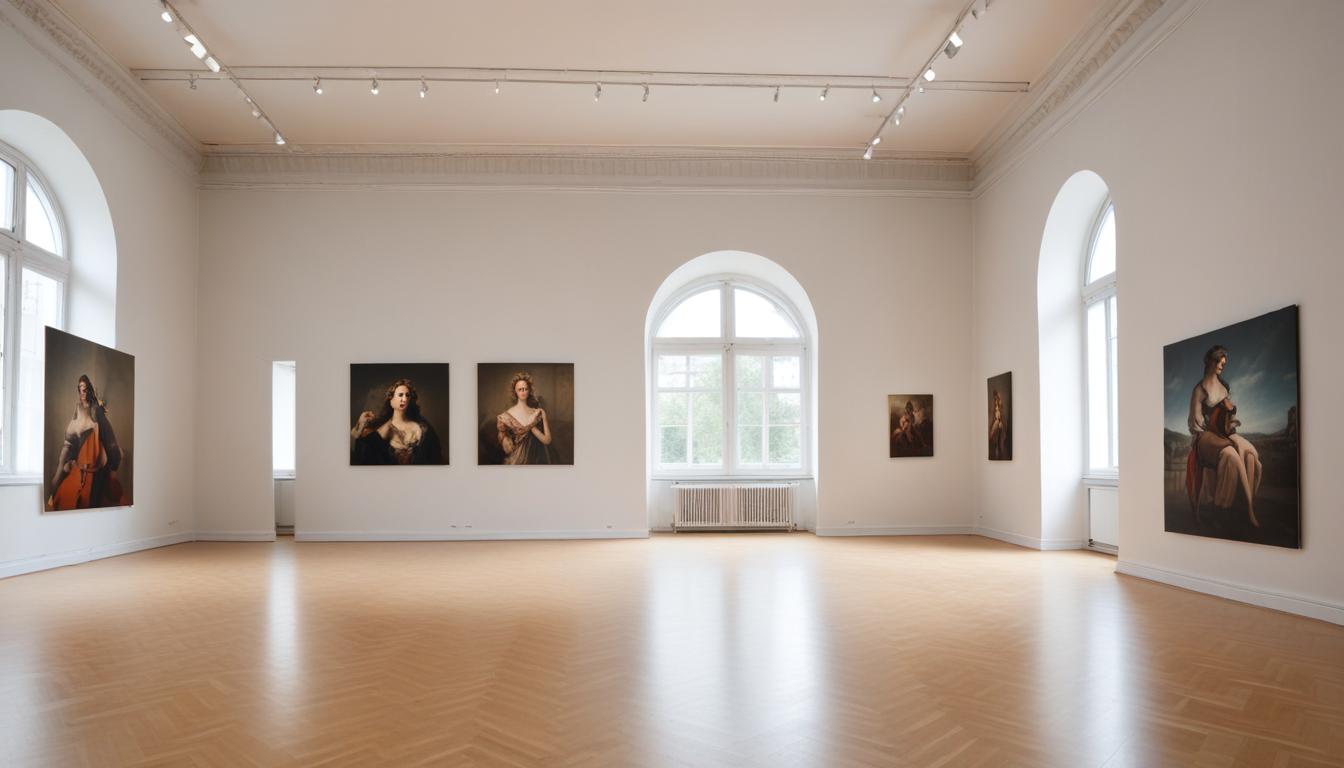
Walk through Kreuzberg on a Friday evening and you'll encounter something distinctly Berliner: a gallery opening in a converted industrial space where entry is by donation, the wine is cheap, and a collective of artists has just installed work that challenges rather than coddles. This scene—unglamorous, experimental, fiercely independent—has become central to how Berlin understands itself as a cultural capital in 2026.
The numbers tell a compelling story. Berlin now hosts over 180 galleries and 170 museums across its twelve districts, generating an estimated €4.2 billion in cultural tourism revenue annually. Yet it's not the scale that defines the city's identity; it's the democratic ethos underlying it. Unlike London or Paris, where gallery hierarchies remain largely fixed, Berlin's art world operates on a principle of radical pluralism—where a student-run project space on Kurfürstendamm sits at the same conceptual table as the Nationalgalerie.
This decentralization reflects something deeper about Berlin's post-Cold War character. The east-west division that once split the city left behind twin infrastructure, and contemporary curators have weaponized that inheritance. The Friedrichshain-Kreuzberg corridor has become a laboratory for socially engaged art, with venues like KW Institute für Zeitgenössische Kunst anchoring networks of smaller collectives. Meanwhile, the Museum Island complex—UNESCO-protected, encyclopedic—represents institutional continuity. The tension between these poles defines Berlin's cultural conversation.
What's particularly striking is how galleries have become neighborhood anchors in ways that feel organic rather than gentrified. In Neukölln, where median rents remain comparatively modest, artist-run spaces function as cultural infrastructure and community gathering point simultaneously. Galerie Wedding, housed in a 1880s silk-weaving factory, exemplifies this: exhibition space, workshop venue, and neighborhood symbol in one converted building.
The pandemic accelerated digitization, but Berlin's galleries have deliberately resisted a fully virtual pivot. Physical presence matters here—the specific humidity of a white cube in Charlottenburg, the industrial echo of a Kreuzberg basement, the light through the Neues Museum's windows. These spaces aren't just exhibiting work; they're making arguments about what deserves cultural legitimacy.
As global art markets consolidate around mega-galleries and art fairs, Berlin's ecosystem offers an alternative model: one where accessibility, experimentation, and institutional critique aren't obstacles to overcome but foundational values. That's not just good for artists. It's become the city's defining cultural statement—proof that creative identity can remain radically open, perpetually unsettled, and undeniably vital.
This article was compiled by AI from the sources linked above and screened before publishing. See our editorial standards.