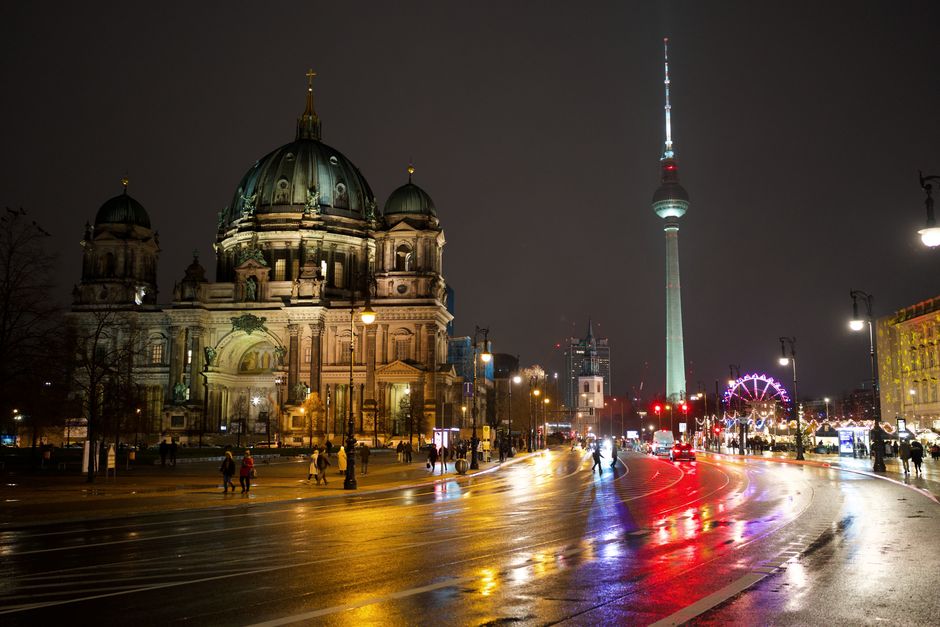
Walk past the Gymnasium Tiergarten on Straße des 17. Juni and you'll see a building that tells Berlin's education story: windows patched with tape, temporary classrooms in shipping containers, and class sizes that would alarm most Western European capitals. Yet this scene, which has become uncomfortably familiar across the city's 700-plus schools, stands in stark contrast to how competing global cities are tackling similar pressures.
Berlin's education system faces a perfect storm. Teacher vacancy rates hover at approximately 12 percent—far exceeding the 5-7 percent norm seen in Paris and Amsterdam—while roughly 30 percent of school buildings require significant renovation. The city's budget allocated €4.2 billion for education in 2025, yet infrastructure investment remains chronically underfunded compared to peer cities spending proportionally more on modernisation.
London's response has been instructive. The British capital invested heavily in digital learning infrastructure post-pandemic, while Berlin schools in districts like Kreuzberg and Neukölln still rely on inconsistent broadband. Similarly, Amsterdam's municipal model emphasises collaborative school networks and flexible staffing arrangements that have reduced burnout—something Berlin's more rigid employment structures haven't achieved.
The contrast extends to university education. Humboldt-Universität and Freie Universität Berlin remain world-class institutions, yet they're increasingly stretched. Paris universities have received targeted EU recovery funding for modernisation; Berlin's institutions compete for significantly smaller pots. International student satisfaction surveys consistently rank Berlin universities high on academics but lower on facilities and support services than comparable institutions in Copenhagen or Stockholm.
Where Berlin shows promise is in innovation. The alternative school movement is thriving, with initiatives like the Montessori schools in Tempelhof-Schöneberg experimenting with models London is only now exploring. Community-led education projects in Wedding and Friedrichshain suggest grassroots solutions that might prove scalable.
However, the structural problems demand more than creativity. Teacher recruitment is critical: Berlin's salaries trail Munich by roughly 8 percent, making talent poaching from the capital all too common. Meanwhile, Amsterdam's integrated immigration support within schools—addressing the needs of 40 percent non-German speaking students—offers lessons Berlin has been slow to implement systematically across districts.
As the school year approaches, Berlin's education leaders face a reality check. The city's progressive reputation attracts families seeking alternatives to traditional systems, yet its infrastructure struggles suggest a gap between aspiration and execution. Without targeted investment matching peer cities' commitment levels, Berlin risks squandering its position as Germany's intellectual capital.
This article was compiled by AI from the sources linked above and screened before publishing. See our editorial standards.