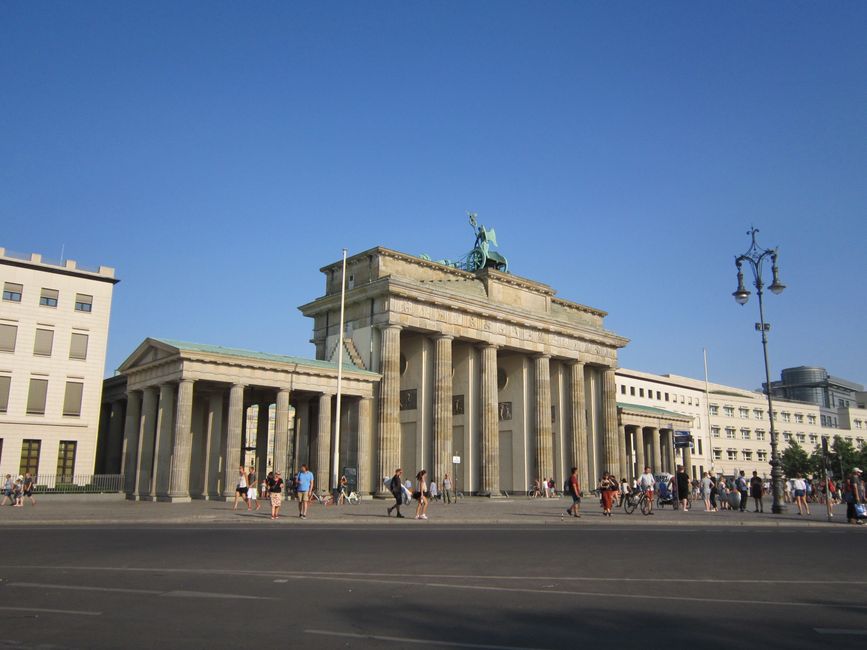
Berlin's Landesarchiv and the BVG transit authority have both completed first-phase audits of their digital image libraries this year, removing tens of thousands of duplicate and near-duplicate photographs that were clogging storage systems and slowing public-access portals. The clean-up, quietly underway since January 2026, puts Berlin ahead of comparable programmes in Paris and Warsaw — but behind Amsterdam, whose municipal archive finished a similar sweep in late 2024.
The push matters now because German federal law requires public bodies to meet updated digital-accessibility standards by the end of 2026, under the amended Barrierefreiheitsstärkungsgesetz. That deadline is forcing Berlin's institutions to audit what they actually hold before they can certify that metadata is clean, searchable, and screen-reader compatible. Duplicate images — sometimes hundreds of near-identical shots of the same U-Bahn platform or Kreuzberg street corner — make that certification process slower and more expensive.
At the Landesarchiv on Eichborndamm in Reinickendorf, staff have been using a combination of perceptual hashing software and manual review since February to flag duplicates across roughly 1.4 million digitised photographs. The BVG, meanwhile, embedded a similar workflow into its internal asset management system at its headquarters in Lichtenberg, targeting the visual content libraries used for passenger information screens across all 173 U-Bahn stations. A BVG spokesperson confirmed the programme in a written statement to The Daily Berlin but declined to specify how many duplicates had been removed to date.
How Berlin Compares With Peers in Vienna and Amsterdam
Amsterdam's Stadsarchief completed its deduplication project in November 2024, processing around 800,000 images using open-source tooling built on the imgHash library. The project cost the municipality approximately €140,000, according to a procurement document published on the Dutch government's Tenderned platform. Vienna's Wiener Stadt- und Landesarchiv launched a comparable effort in March 2026 — two months after Berlin — but has so far concentrated only on its post-1945 photographic holdings, a narrower scope than Berlin's approach.
Paris is the notable laggard among major European capitals. The Bibliothèque historique de la Ville de Paris announced a deduplication review in 2023, but the project stalled after a software licensing dispute, according to procurement records published in the Journal officiel. Rome has no publicly announced municipal programme at all. In that context, Berlin's dual-track approach — running archive and transit infrastructure in parallel — looks relatively ambitious, even if it was driven partly by a compliance deadline rather than proactive digital housekeeping.
The practical stakes extend beyond tidiness. Duplicate images inflate cloud storage costs, complicate copyright clearance for reuse, and can create legal exposure when the same image appears in multiple licensed and unlicensed contexts simultaneously. For a city like Berlin, where Kreuzberg and Neukölln street photography is commercially valuable and widely reproduced, getting the licensing metadata right has real financial consequences for publicly owned collections.
What Comes Next for the Affected Institutions
The Landesarchiv is expected to publish a progress report on the deduplication audit by September 2026, ahead of the federal accessibility deadline in December. Institutions that miss that deadline face potential sanctions under the Barrierefreiheitsstärkungsgesetz, though enforcement timelines remain unclear.
For Berliners who use the Landesarchiv's online portal — which logged roughly 60,000 unique users in 2025, according to the archive's annual report — the visible change will be cleaner search results and faster image load times. The BVG's work will filter through more indirectly, improving the accuracy of visual content shown on digital signage at busy interchange stations like Ostbahnhof and Alexanderplatz.
Whether other Berlin institutions — the Stadtmuseum, the Akademie der Künste, the numerous district-level Bezirksarchive — follow the Landesarchiv's lead will likely depend on whether the federal deadline creates enough pressure. For now, Berlin has a narrow but real head start on most of its European counterparts. The question is whether it uses the next six months to consolidate it.