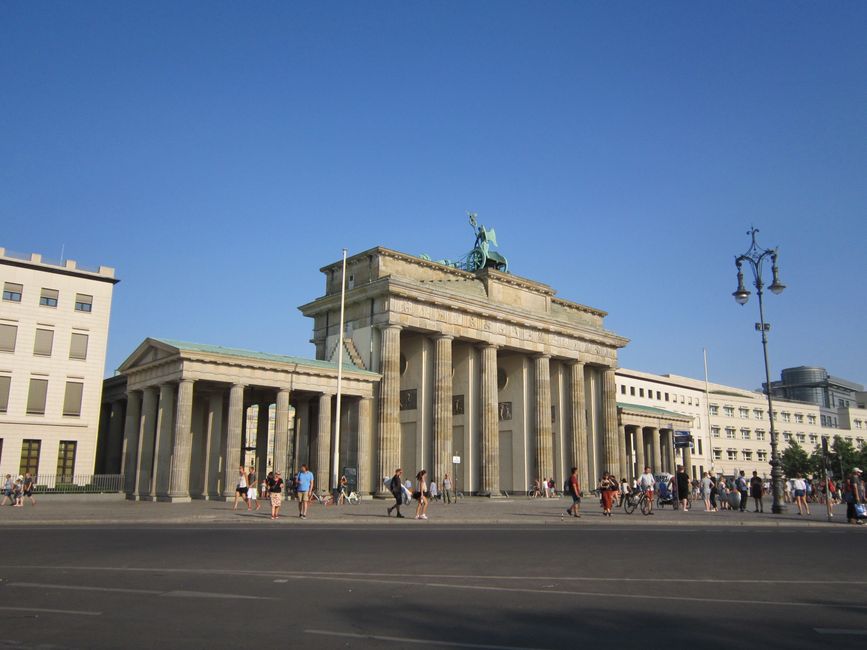
Berlin's public digital infrastructure has a clutter problem. Across more than two dozen municipal agencies and the city's central media repositories, thousands of duplicate image files have piled up over the past decade — the same photograph of the Brandenburg Gate stored under seven different filenames, the same portrait of a district mayor duplicated across three separate content management systems. The immediate trigger for renewed attention is a 2026 audit by the Senatsverwaltung für Inneres und Digitales, which found redundant assets accounting for a significant share of wasted server capacity in city-operated data centres.
The issue matters now because Berlin is in the middle of a €240 million digital modernisation push — the Digitalisierungsstrategie Berlin — that the SPD-led Senate coalition has tied to visible improvements in resident-facing services before the next state election cycle. Duplicated image files are not glamorous, but they sit at the heart of a deeper structural failure: city departments built their own siloed digital workflows for years, buying separate licences, maintaining separate archives, and never agreeing on a shared file-naming standard. Every silo added another copy of the same asset.
How the Pile-Up Happened
The roots go back to roughly 2010, when Berlin's Bezirke — the twelve districts including Mitte, Friedrichshain-Kreuzberg and Tempelhof-Schöneberg — each accelerated their own web presences without coordination from the centre. The city's central content portal, berlin.de, ran on different infrastructure from district sites. The Berliner Senatskanzlei used one image management tool; the BVG, the public transport operator, maintained its own press archive; the Berlin Senate Department for Urban Development kept a separate repository of planning and construction photography. When a single press photo of a new tram line on the Invalidenstraße was published, it routinely ended up saved independently by four or five different communications offices.
The problem deepened after 2015, when the influx of new residents — Berlin's population crossed 3.7 million around that period — drove a surge in public information campaigns about housing, integration services and transport. The Turkish-German community organisations in Neukölln and Wedding, partly funded through Senate programs, were among the many bodies producing multilingual digital content. Each campaign generated imagery. Almost none of it was catalogued against a master registry.
The Zentrales IT-Dienstleistungszentrum Berlin, known as ITDZ Berlin, which manages the city's core technical infrastructure, flagged the duplication issue in an internal report as early as 2019. No coordinated remediation followed. Budget cycles, departmental turf, and the disruption of the pandemic all pushed the fix down the priority list. By 2023, estimates cited in procurement documents suggested the city was maintaining upward of 180 terabytes of image and media data, with duplication rates in some departmental archives running above 30 percent.
What a Fix Looks Like — and Who Pays
The Senatsverwaltung für Inneres und Digitales is now piloting a deduplication and asset management system across three departments, with the Stadtentwicklungsbehörde and the communications office of the Bezirksamt Mitte among the first to run structured audits. The pilot, launched in spring 2026, uses hash-based matching — software that generates a unique fingerprint for every file — to identify true duplicates regardless of filename. Early results from the Mitte pilot, covering roughly 40,000 archived images dating to 2008, reportedly flagged more than 11,000 files as exact or near-exact duplicates.
The longer-term plan calls for migrating all participating agencies onto a shared Digital Asset Management platform by the end of 2027, with ITDZ Berlin acting as the central host. Cost estimates for the full rollout have not been published, but the pilot phase sits within the Digitalisierungsstrategie budget envelope.
For Berliners, the practical upshot is modest but real. Faster-loading district websites, cheaper storage bills for a city already stretched on housing and transport spending, and — eventually — a single place where journalists, architects, and planners can request official photographs without emailing five different press offices. The Prenzlauer Berg district office spent most of June 2026 manually cross-checking its image archive. That kind of human labour, multiplied across twelve Bezirke, is what the city is trying to stop spending money on.