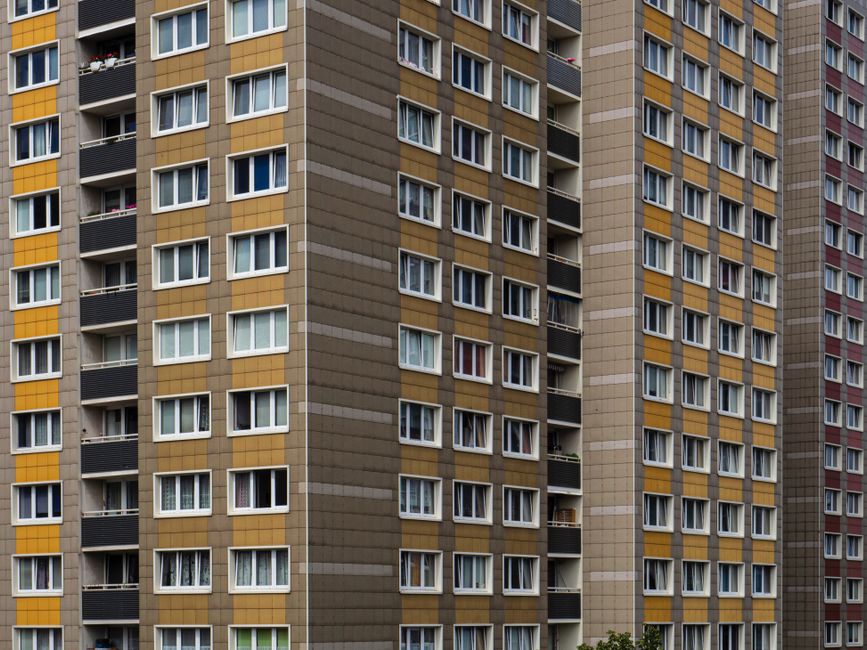
Steglitz Remains Berlin’s Blue-Chip Buy Despite Rising Prices
With average prices still trailing the city’s hottest districts, Steglitz holds surprising value—and a rush of interest from both families and investors.
With average prices still trailing the city’s hottest districts, Steglitz holds surprising value—and a rush of interest from both families and investors.

Steglitz, long the preserve of established Berliners and discreet affluence, is drawing a fresh wave of interest as one of the last "blue-chip" suburbs where buyers can still find genuine value. Even as Berlin’s property market faces continued pressure from high demand and limited supply, Steglitz’s average apartment prices have only just nudged above €6,100 per square metre, a figure still modest compared to Mitte or Charlottenburg.
It’s a timely moment for the district. With the latest round of city-wide rent reforms taking shape—City Hall last week reaffirmed its commitment to capping annual rent increases—Berlin’s investors are refocusing on stable, mature neighborhoods where risk is low and long-term returns look safe. "The fever has returned to Steglitz," said an agent with BerlinPropertyCheck, pointing to a sharp uptick in viewing appointments for the classic Altbau blocks south of Schlossstraße.
Unlike the feverish gentrification seen in Neukölln or the relentless rise of Prenzlauer Berg, Steglitz feels sedate—at least on the surface. Don’t be fooled. Along Albrechtstraße and near the leafy streets around Bismarckstraße, development is in high gear. Commuters value the U9 and S1 lines at Rathaus Steglitz, while families prize the catchment of the highly regarded Beethoven-Gymnasium and proximity to the new Steglitz-Zehlendorf Science Campus at Ostpreußendamm, which opened its Phase II labs in April this year.
The area’s retail heart—Schlossstraße—offers shoppers everything from KaDeWe-owned ELLA to independent bookstores like Bücherwelt, while green spaces such as Insulaner Park and the Botanical Garden (Botanischer Garten Berlin) keep it family-friendly. Recent investments in the area, like the renovation of the Gutshaus Steglitz cultural centre (complete with new art studios and children’s theatre programs), have also attracted creatives priced out of Friedrichshain-Kreuzberg.
Data from the Berlin Chamber of Commerce shows that by May 2026, average apartment prices in Steglitz had risen 5% year-on-year, topping €6,100/sqm—noticeably lower than the Mitte average of €7,300, or even Prenzlauer Berg’s €7,700. Rentals remain practical too, with three-room Altbau flats along Hackerstraße letting for around €1,550 a month—welcoming for those squeezed by price hikes further north. Vacancy rates have tightened since 2024, now standing at 2.2%, but the pace of new listings has kept outcomes more stable than in high-intensity hotspots like Friedrichshain (now below 1.4%).
For buyers, security is a major draw. "There’s much less speculation here," one mortgage broker on Grunewaldstraße explained, referencing the steady presence of owner-occupiers and long-term tenancies. Recent city statistics show that Steglitz-Zehlendorf maintains the city’s third-lowest eviction rate, behind only Pankow and Lichtenberg.
Analysts also point to the impact of the latest energy-efficiency grants available for older buildings in this district, bringing high-spec upgrades without the sticker shock seen in Mitte’s luxury new builds.
With the city bracing for another wave of summer heat, Berlin families and investors alike are eyeing Steglitz’s garden-heavy residential blocks for both livability and future value. Experts expect moderate but consistent growth here for the next 18 months, even as the city’s price surge cools. Agents recommend acting quickly: properties near Insulaner Park, particularly those with pre-installed heat pumps and EV charging access, are selling within weeks of listing, well ahead of the Berlin median turnaround time of 65 days.
For buyers priced out elsewhere or seeking the safe end of the German capital’s residential market, Steglitz’s enduring appeal may just be its best asset. With access to leading schools, transport, and high street shopping, the value on offer still stands out—meaning those in the know aren’t waiting for the rest of Berlin to catch up.
How does this story make you feel?
Spread the word
About this article
Published by The Daily Berlin
Daily brief
Free, in your inbox before 7am. Weekdays.
More in Property