Berlin's Endurance Boom: What the Participation Numbers Actually Tell Us
Registration data from Berlin's biggest running, cycling and triathlon events reveals a fitness culture that has shifted well beyond weekend warriors.
Registration data from Berlin's biggest running, cycling and triathlon events reveals a fitness culture that has shifted well beyond weekend warriors.
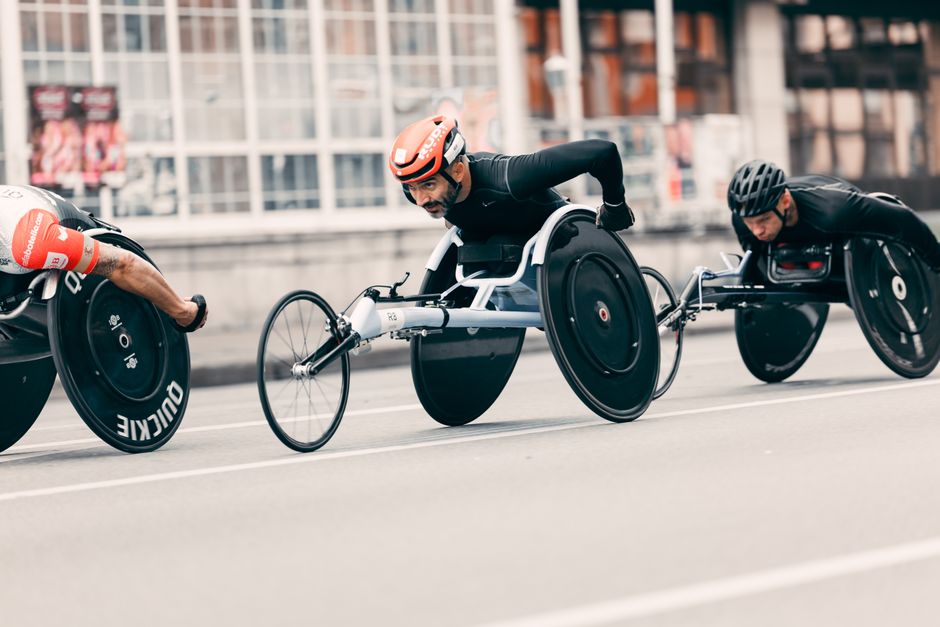
More than 47,000 runners crossed the finish line of the 2025 Berlin Marathon last September, a record for the Abbott World Marathon Majors event, and pre-registration for the 2026 edition, which opens fully in August, already shows a waitlist exceeding 90,000 applicants. Those figures are not incidental. They describe a city that has systematically rebuilt its relationship with endurance sport over the past decade, and the data from races, cycling clubs and triathlon federations tells a story that goes well beyond spandex and gel packets.
The timing matters. Europe is in the grip of a sustained gym-culture hangover, membership attrition at traditional fitness chains has accelerated since 2023, according to the European Health & Fitness Association's annual report, and urban outdoor sport is filling the gap. Berlin, with its 1,700 kilometres of dedicated cycling infrastructure and three lakes within the S-Bahn ring, has the geography to absorb that shift in a way that Hamburg or Munich simply cannot match at the same scale.
The Berliner Laufkalender, the city's centralised race-listing body, logged 214 sanctioned running events in 2025, up from 178 in 2022. Average field sizes have grown too. The Volksläufe, the mass-participation community races that crisscross districts from Prenzlauer Berg to Tempelhof, drew combined entries of roughly 68,000 last year, according to figures the organisation published in March. The Berliner Triathlon at Müggelsee, held each June, sold out its Olympic-distance category in eleven minutes when registration opened in January; the organising club, Tri-Team Berlin e.V., added a second wave for 2026 after turning away more than 800 applicants.
Cycling numbers are equally striking. The ADFC Berlin, the city's affiliate of the German cycling federation, reported 28,400 paid members at the end of 2025, the highest figure in its history. Participation in the annual Sternfahrt, the mass ride that converges on the Straße des 17. Juni each June from eleven approach routes, hit 220,000 riders this year. That is not a niche hobby statistic. It is roughly one in every seventeen Berlin residents turning up for a single cycling event.
What the data suggests, when you set it against survey work published by the Landessportbund Berlin in April 2026, is a demographic broadening. The traditional endurance participant, male, 35-to-50, university-educated, still dominates age-group results tables, but first-time registrant data from the Berlin Half Marathon shows women now represent 44 percent of new entrants, and the 18-to-29 age bracket has grown by 31 percent since 2021. Running clubs operating out of Volkspark Friedrichshain and along the Tempelhofer Feld have reported membership waitlists of their own, a logistical problem most sports organisations would be delighted to have.
For anyone trying to enter this culture rather than observe it, the practical picture is this: the Berlin Marathon ballot for 2026 closes on 31 July and entry costs €145 for domestic runners. The Spreewald Ultramarathon, a 100-kilometre trail event south of the city, still has roughly 200 places available for its September date at €98 per entry. Tri-Team Berlin e.V. is running open-water swim coaching sessions at Weißensee every Tuesday evening through August for €8 per session, specifically designed to funnel new triathletes toward the 2027 event calendar.
City planners are paying attention. The Senate Department for Urban Development confirmed in May that three new sealed running-and-cycling paths are scheduled for completion before winter along the Panke river corridor in Wedding and Reinickendorf, an infrastructure bet on participation trends continuing upward. Whether the city builds fast enough to keep pace with the demand it has already generated is a question the registration queues are answering in real time.
How does this story make you feel?
Spread the word
About this article
Published by The Daily Berlin
Daily brief
Free, in your inbox before 7am. Weekdays.
More in Sport


