sport
Berlin's 44-Year Amateur League Built Today's Entry-Level Football Structure
The former Amateur-Oberliga Berlin ran 44 seasons and set the pattern for tiered competition that still guides entry-level involvement today.
Listen in English · 3 min
How we reported this
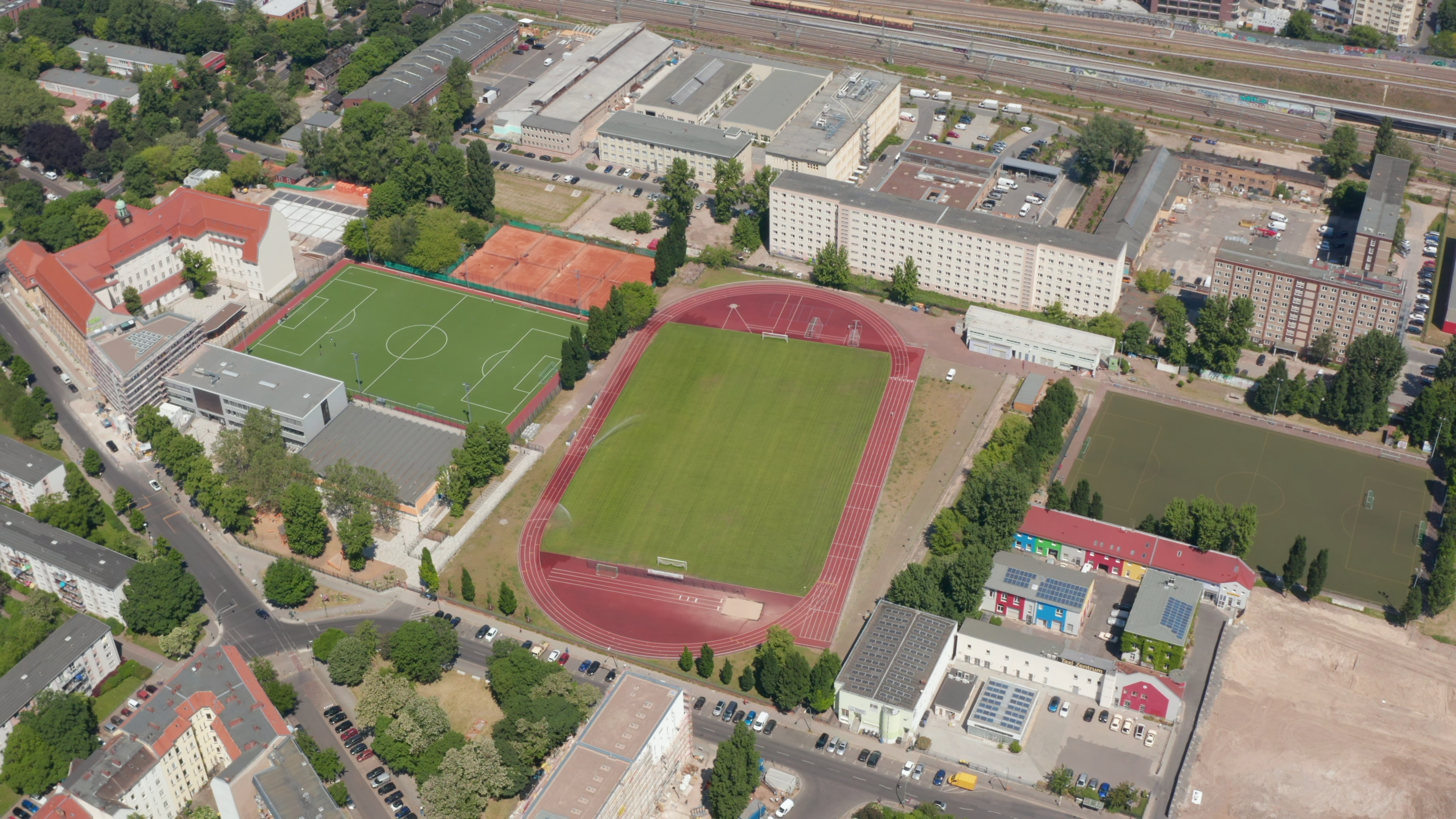
The Amateur-Oberliga Berlin completed 44 seasons before folding in 1991, leaving a clear record of how local clubs moved between levels in the city.
That record matters for anyone in Berlin looking to join amateur football now because the old structure shaped the pyramid that replaced it after reunification. Players and teams still enter at the base and aim upward through successive divisions, just as clubs did when the league operated under different names from 1947 onward.
Team counts and promotion rules shaped entry
From 1950 the competition settled on twelve clubs, with the top two promoted and the bottom two sent down. The number rose to fifteen in 1952 and sixteen in 1959, then reached eighteen after the 1974 reorganisation that followed the end of the Regionalliga Berlin. These fixed sizes meant newcomers had to win their way in through lower divisions rather than simply signing up.
The single-division format that began in the 1950-51 season also set expectations for consistent performance across an entire campaign. East Berlin sides departed after the 1949-50 season, leaving the remaining clubs to compete solely within the western part of the city until 1991.
What newcomers need to know before signing up
Anyone starting today should check current equivalent divisions that trace back to the old promotion links, such as the path that once led to the 2nd Bundesliga. Clubs that finished in the top spots historically earned the right to move up, so current teams still treat league position as the direct route to higher competition. The final title went to Tennis Borussia Berlin in the 1990-91 season, showing that established names remained competitive right to the end.
Prospective players can begin by contacting local clubs that compete in the successor NOFV-Oberliga or the Landesliga below it. Training schedules and registration follow the same seasonal rhythm the old league used, with matches running from late summer into spring. Bringing basic fitness and a willingness to play in a structured group is the practical first step, because the historical emphasis on steady performance across many teams still applies.