SenseFlow: The Berlin AI Startup Quietly Reshaping Industrial Quality Control
A Kreuzberg-based deep learning firm is automating visual inspection for European manufacturers—and just landed €12 million in Series A funding.
A Kreuzberg-based deep learning firm is automating visual inspection for European manufacturers—and just landed €12 million in Series A funding.
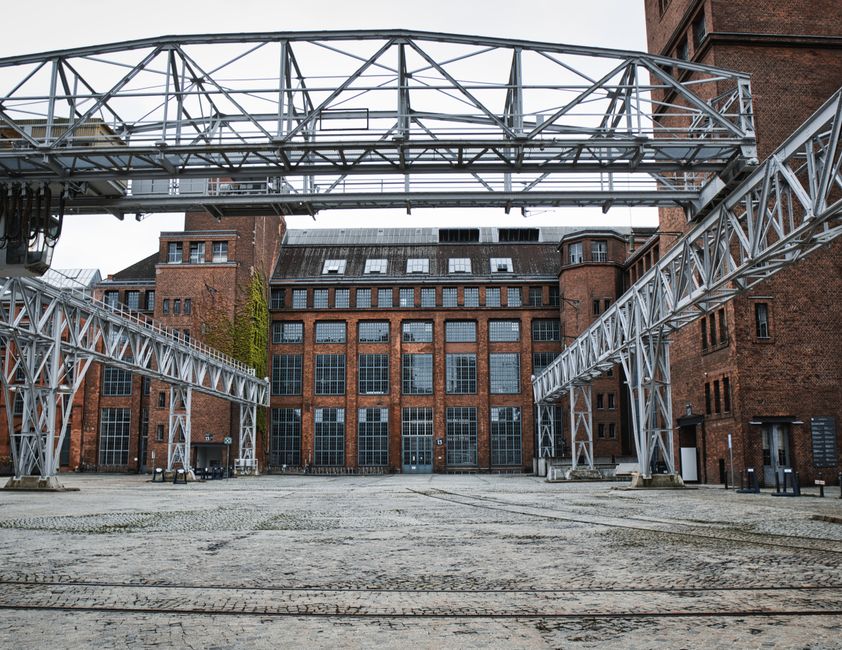
While Berlin's startup scene obsesses over consumer apps and web3 experiments, a scrappier narrative is unfolding in the city's industrial tech sector. SenseFlow, a two-year-old artificial intelligence company based in a converted factory building on Mehringdamm, has quietly become one of Europe's most promising solutions for manufacturing quality control—and investors are taking notice.
Founded by three former engineers from Siemens and SAP, SenseFlow deploys computer vision systems that catch production defects in real time. The company announced €12 million in Series A funding this week, led by Munich-based Earlybird Ventures, with participation from the European Investment Fund. For context, that's substantial backing in a market where most Berlin tech funding flows toward consumer-facing startups in Mitte and Charlottenburg.
The problem SenseFlow solves is deceptively straightforward. European manufacturers—particularly automotive suppliers and electronics producers—still rely on human inspectors to spot microscopic flaws on production lines. Error rates hover around 30 percent. SenseFlow's AI systems, trained on millions of labeled images, achieve 99.4 percent accuracy while processing inspection footage in milliseconds. A single installation can eliminate 8-12 full-time inspector positions, reducing labour costs by roughly 35 percent annually.
What distinguishes SenseFlow from Silicon Valley competitors is its approach to integration. Rather than demanding manufacturers replace entire production systems, the company's software plugs directly into existing camera infrastructure at factories across Germany, Poland, and the Czech Republic. Customers include Bosch subsidiaries and mid-tier suppliers serving Volkswagen and BMW—companies that prioritize compatibility and reliability over flashy innovation narratives.
The funding will accelerate SenseFlow's expansion into aerospace and pharmaceutical manufacturing, sectors with even stricter quality tolerances and fatter margins. The company is also doubling its engineering team, recruiting heavily from Berlin's computer science departments and established tech firms.
This represents a subtle but significant shift in Berlin's tech identity. For years, the city attracted venture capital as a consumer startup hub—think SoundCloud, N26, and countless food delivery experiments. SenseFlow embodies a different possibility: Berlin as a serious engineering centre for industrial-grade AI, competing directly with companies in Stuttgart and Aachen. It's less romantic than disruption mythology, but potentially more durable. The city's proximity to manufacturing clusters in eastern Germany, combined with strong university research partnerships and lower talent costs than Munich or Frankfurt, creates genuine competitive advantages.
SenseFlow's growth matters beyond its own valuation. It signals that Berlin's venture ecosystem is maturing beyond the startup clichés, and that unglamorous industrial problems—when solved well—can command serious institutional capital.
This article was compiled by AI and screened before publishing. See our editorial standards.
How does this story make you feel?
Spread the word
About this article
Published by The Daily Berlin
Daily brief
Free, in your inbox before 7am. Weekdays.
More in tech


