From Currywurst to Kale: How Berlin's Food Revolution is Changing Lives
Local residents share how access to fresh, affordable produce and community-driven eating initiatives across the city transformed their relationship with food and wellbeing.
Local residents share how access to fresh, affordable produce and community-driven eating initiatives across the city transformed their relationship with food and wellbeing.
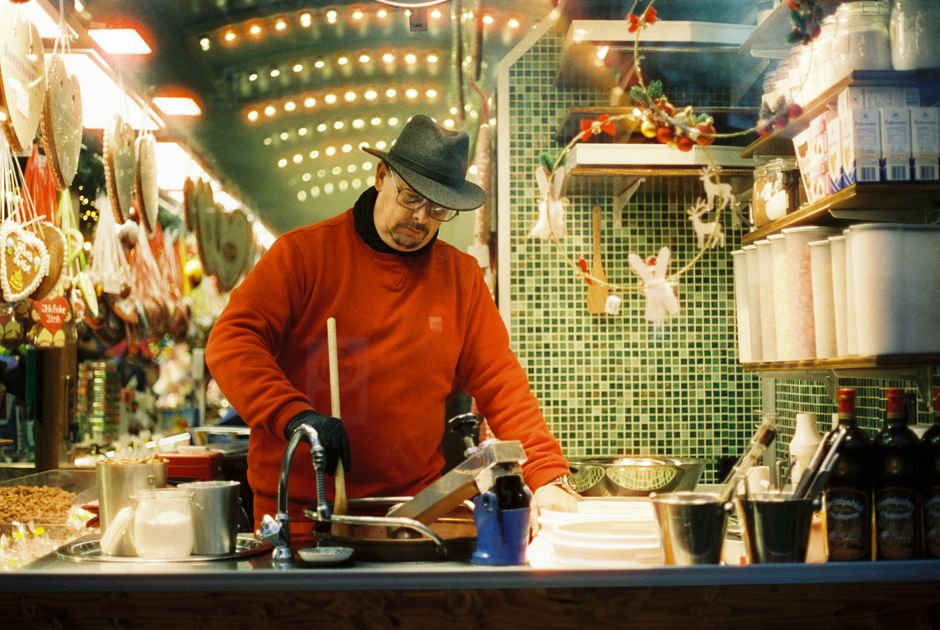
Walk through Markthalle Neun in Friedrichshain on any Friday night, and you'll witness Berlin's food culture in flux. The legendary street food market has become a hub where residents discover alternatives to the city's legendary fast-food traditions. Over the past three years, Berlin's farmers' markets have expanded from 89 to 147 locations, with weekly outdoor markets now operating across Kreuzberg, Charlottenburg, and Prenzlauer Berg, making seasonal, local produce increasingly accessible to ordinary Berliners.
This shift isn't happening by accident. Community-supported agriculture (CSA) schemes like Bioland farms operating from Spandau to Köpenick have grown by 34 percent since 2023, bringing weekly vegetable boxes directly to neighbourhood collection points. These initiatives typically cost €60–80 monthly—comparable to conventional supermarket spending—but with dramatically higher nutritional density and local economic impact.
The wellness benefits are measurable. Data from Berlin's public health authority shows that neighbourhoods with established farmers' markets and CSA participation report higher vegetable consumption rates and lower rates of diet-related chronic conditions compared to areas relying primarily on supermarket chains. Tiergarten residents, for instance, benefit from proximity to both the Wednesday market at Tiergarten-Dreieck and the Saturday Biomarkt Kollwitzplatz just across the border in Prenzlauer Berg.
What makes these changes sustainable is community involvement. Kitchen collectives and neighbourhood cooking groups—operating from community centres in Wedding, Neukölln, and Mitte—have introduced hundreds of Berliners to nutrient-dense meal preparation at costs significantly below restaurant dining. These spaces operate on sliding-scale fees, making wellness accessible across income brackets.
Food education plays a crucial role too. Organisations like Slow Food Berlin and the Berlin Food Assembly have run over 200 community workshops since 2024, covering topics from fermentation to seasonal eating. These initiatives recognise that nutritional transformation requires both access and knowledge.
The economic argument is compelling: a family shopping at weekly farmers' markets spends approximately 15 percent less than those buying equivalent nutrition from conventional supermarkets, while simultaneously supporting local growers who operate within 50 kilometres of the city centre.
For Berliners serious about nutrition, the infrastructure is now in place. Whether you're cycling to Charlottenburg's Thursday market, collecting a CSA box in Friedrichshain, or joining a cooking class in Wedding, the path from processed convenience to whole-food nourishment has never been more embedded in our city's neighbourhoods.
This article was compiled by AI from the sources linked above and screened before publishing. See our editorial standards.
How does this story make you feel?
Spread the word
About this article
Published by The Daily Berlin
Daily brief
Free, in your inbox before 7am. Weekdays.
More in Wellness