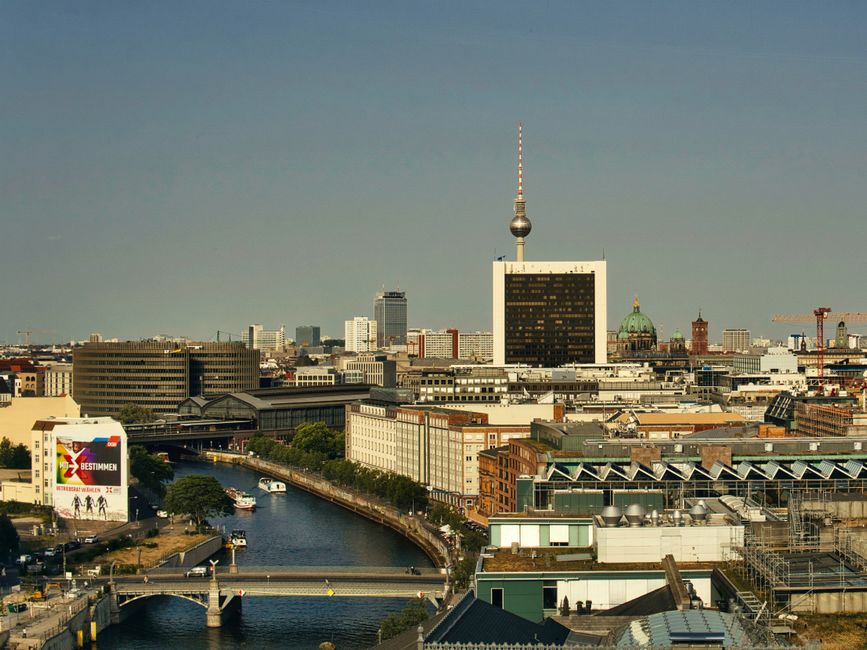
Walking past the outdoor gym near Tiergarten's Neuer See on a Wednesday morning, you'll spot a pattern: clusters of people in their 60s, 70s, and beyond, moving through resistance circuits and stretching routines. Many are there because of Berlin's expanding network of free senior fitness programmes run directly by local district councils—a wellness initiative that has quietly grown into one of Europe's more progressive models for active ageing.
The Charlottenburg-Wilmersdorf Bezirksamt has led the charge. Since 2023, the district has funded 'Fit ab 60'—a twice-weekly aqua aerobics session at the Südwestbad on Bertastr., plus Nordic walking groups that depart from the Charlottenburg Palace park entrance. Cost: zero. Registration is handled through the district's health office on Richard-Wagner-Str. Attendance has grown from 43 participants in year one to over 240 regular attendees.
Across the Spree in Kreuzberg, Friedrichshain-Kreuzberg's council operates a different model: subsidised outdoor fitness classes in Görlitzer Park and Treptower Park, where qualified instructors lead tai chi and low-impact strength sessions every Tuesday and Thursday. The council funds these at roughly €8,000 annually—a fraction of what private gyms charge per member, per year.
What makes these programmes distinct is their design philosophy. Unlike commercial fitness spaces, they prioritise accessibility over aesthetics. Sessions are scheduled for mid-morning, when public transport is less crowded. Instructors are trained in fall prevention and joint protection—a crucial consideration given the prevalence of osteoarthritis and balance concerns in this demographic. The programmes align with emerging research showing that small, regular doses of movement provide measurable benefits for cardiovascular health, bone density, and psychological wellbeing.
Marzahn-Hellersdorf's council has gone further, partnering with local community centres to offer free chair-based exercise for those with mobility limitations—a detail often overlooked by mainstream fitness culture. The venues are neighbourhood hubs, not anonymous leisure complexes, fostering genuine community connection alongside physical activity.
The catch? Awareness remains patchy. Many eligible Berliners simply don't know these programmes exist. A 2025 informal survey by Charlottenburg's health department found that only 31% of residents over 60 in the district were aware of free council-run fitness options. Word-of-mouth continues to be the primary recruitment channel.
For those interested, start with your local Bezirksamt's health office. Most offer printed schedules, though details are increasingly available on district websites. In a city where private gym membership averages €45–€70 monthly, the council's investment in free, neighbourhood-based fitness represents a quiet statement: that movement in later life is not a luxury, but a public good.
This article was compiled by AI from the sources linked above and screened before publishing. See our editorial standards.