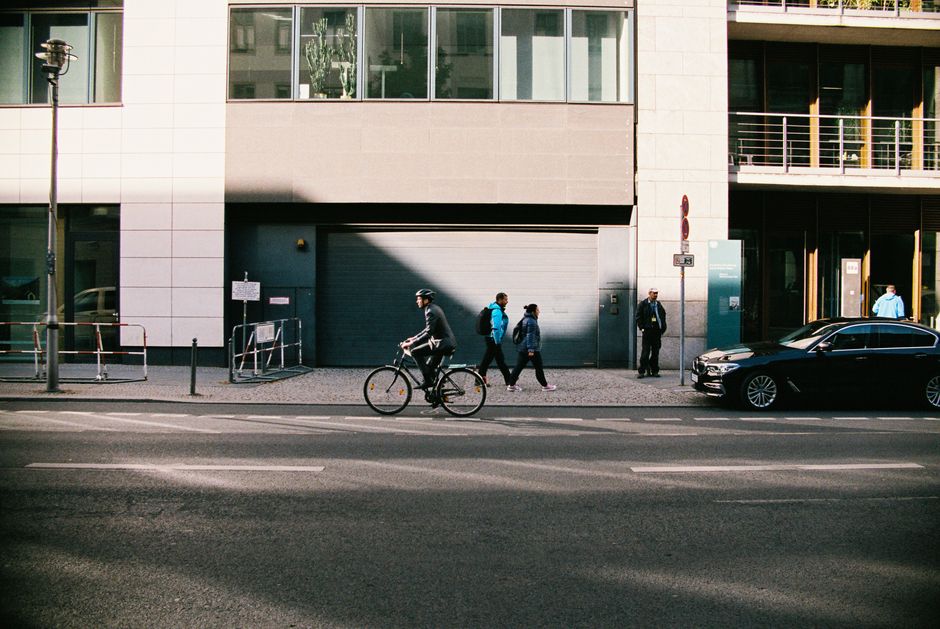
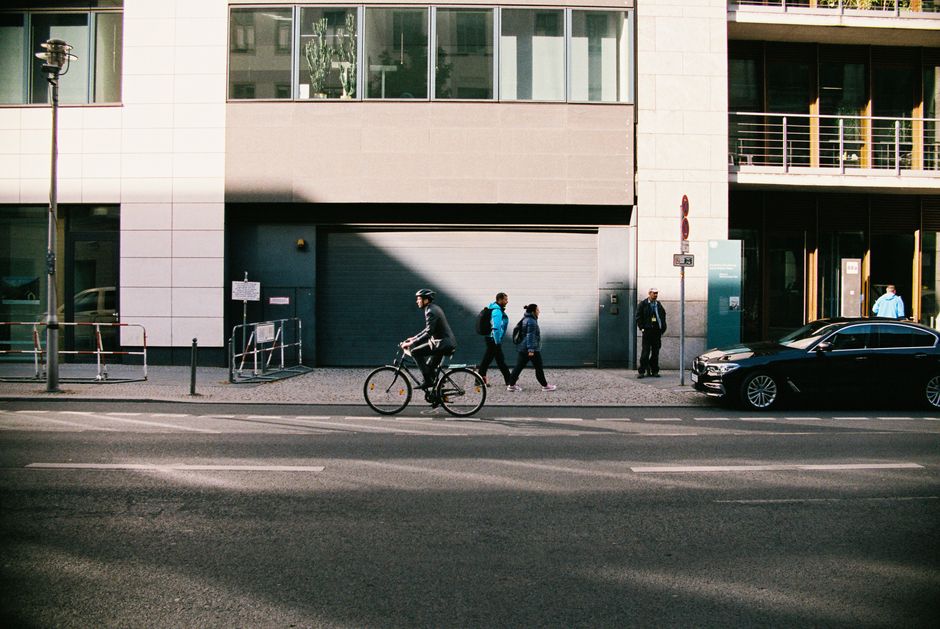
New cycle infrastructure opens in Charlottenburg while district heating expansion reaches Friedrichshain, marking tangible progress on the city's climate targets.
A controversial decision to postpone large-scale urban renewal in Kreuzberg and Neukölln signals shifting priorities in the capital's battle against soaring rents.
Following last week's shooting at a mothers-and-children facility, city officials must decide between expanded security measures and community-based prevention—and the clock is ticking.
As major rail upgrades, the U-Bahn expansion, and the contentious Stadtring project enter decisive phases, the city faces pivotal choices about funding, timelines, and which neighbourhoods get priority.
As vacancy rates plummet and rents spiral across Kreuzberg and Charlottenburg, city planners face a defining moment on whether to prioritize density, affordability, or preservation.
As global cities grapple with fragmentation, Berlin's grassroots approach to local safety and cohesion is proving more effective than top-down models elsewhere.
From open-door rhetoric to integration crises, the German capital's approach to migration has fundamentally reshaped its neighborhoods, economy, and political landscape.
As overcrowding and teacher shortages plague Berlin's classrooms, the city faces a harder battle than neighbouring European capitals to modernise its school system.
As the capital pushes toward carbon neutrality by 2045, ordinary Berliners share their hopes and frustrations with neighbourhood-level sustainability efforts.
As rents across Kreuzberg and Friedrichshain continue to surge, city planners are adopting strategies that both mirror and diverge sharply from approaches in London, Amsterdam, and Paris.
As Berlin's most contested neighbourhood faces a pivotal decision on affordable housing protections, residents and policymakers must choose between competing visions for the district's future.
As the Senate faces mounting pressure over affordability and gentrification, key decisions on rent controls, social housing targets, and Tempelhofer Feld development will define Berlin's next five years.
As the city commits to carbon neutrality by 2045, newly released statistics reveal both remarkable progress and stubborn challenges in Berlin's environmental transformation.
From Schrönefeld's post-reunification boom to today's €15-per-square-metre rents, The Daily Berlin traces the policy decisions that transformed the capital's legendary affordability into an acute urban emergency.
As the city pushes forward with major underground rail extensions to Charlottenburg and Spandau, residents face years of disruption—but also unprecedented connectivity that could reshape where Berliners choose to live and work.
As the city council reconvenes after the recess, decisions on housing density, transport expansion and Tegel's future redevelopment will define Berlin's next decade.