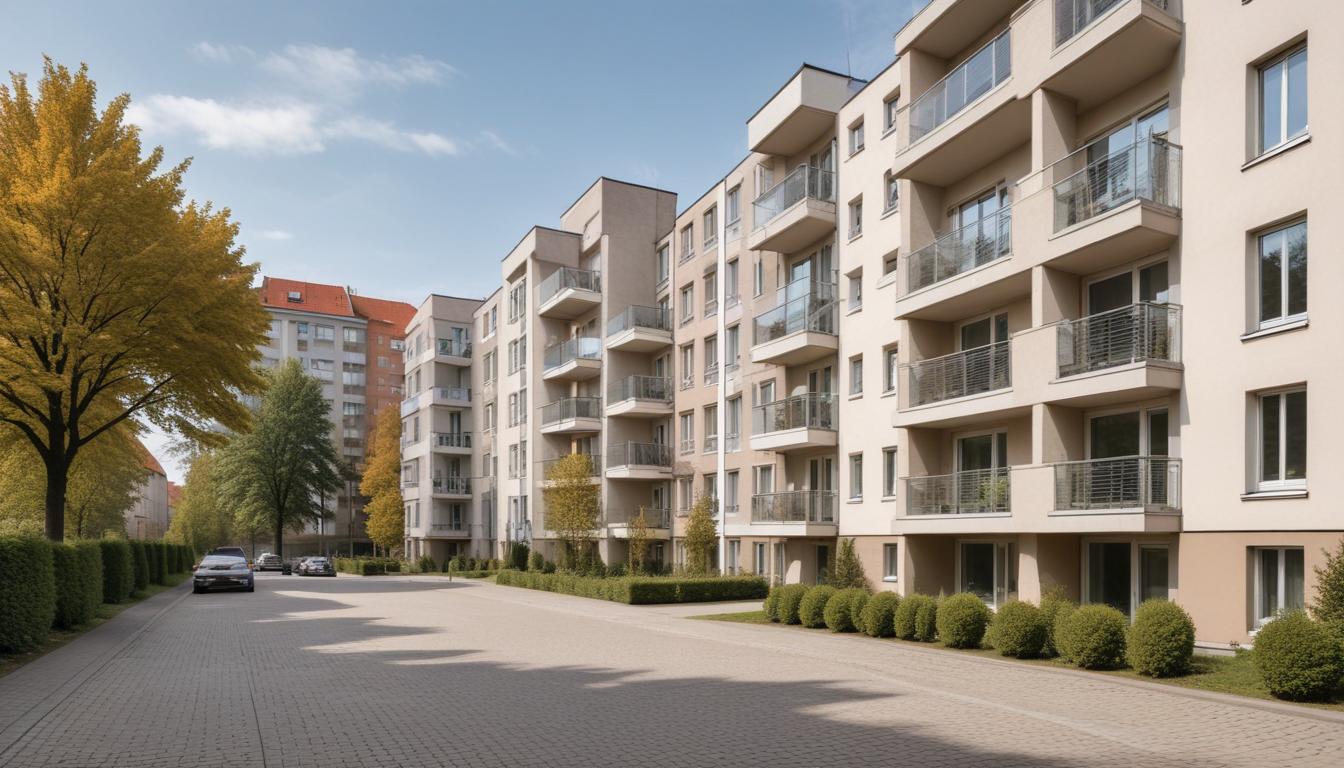
Berlin Tightens Affordable Housing Rules, Slowing Development
New quotas force developers to include more social units, cooling speculative projects across the city's fastest-growing neighborhoods.
New quotas force developers to include more social units, cooling speculative projects across the city's fastest-growing neighborhoods.
Listen to this article · 3:59
Berlin's Senate Building Department has tightened mandatory affordable housing requirements in planning decisions, shifting from a 30 per cent to 40 per cent quota for new residential developments across growth zones—a policy recalibration that is already rippling through the city's property investment landscape.
The change, effective since January 2026, applies broadly to projects exceeding 20 units in areas designated for intensification, including stretches of Pankow, Friedrichshain-Kreuzberg, and parts of Lichtenberg. For developers, the mathematics are unforgiving: where average Berlin asking prices hover near EUR 5,500 per square metre, the requirement to lock in 40 per cent of units at capped social rent (currently EUR 11–13 per sqm) materially compresses profit margins on mid-sized schemes.
Market reaction has been swift. Commercial property consultants report a 12–15 per cent slowdown in planning applications for residential projects under 50 units in affected districts, as smaller developers withdraw or scale back proposals. Conversely, larger institutional players with mixed-income portfolio strategies are accelerating acquisitions of larger sites where economies of scale make the quota manageable. Two prominent sites on Prenzlauer Allee and along the Spree's Friedrichshain waterfront have shifted hands to European pension funds in recent weeks, according to market intelligence.
The policy's stated intent—addressing the city's chronic shortage of affordable units—reflects genuine pressure. Berlin's tenant protections and low vacancy rates have made housing access precarious for lower-income households, particularly in established neighbourhoods like Mitte and Prenzlauer Berg, where rents have doubled since 2015. The new mandate aims to anchor affordability into new supply rather than relying solely on acquisitions or conversions.
Yet unintended consequences are surfacing. Planning timelines have extended by 6–8 weeks as Senate officials assess affordability compliance alongside density and infrastructure considerations. Some developers are exploring alternative models—modular housing partnerships with housing associations, or phased schemes that front-load social units. Others are quietly marketing projects to corporate housing funds seeking long-term, yield-stable assets rather than speculative turnovers.
Housing advocates are cautiously optimistic. The Berliner Mieterverein notes the policy addresses demand elasticity: if 40 per cent of new stock remains permanently affordable, displacement pressures in surrounding areas may ease. Conversely, some economists warn that constrained developer returns could further depress construction volumes at a moment when Berlin needs 20,000+ units annually just to stabilise rents.
The real test arrives over the next 18 months, as the first wave of compliant projects break ground. Market indicators—land prices, permit applications, rental yields—will reveal whether Berlin has engineered sustainable affordability or merely redirected investment elsewhere.
This article was compiled by AI from the sources linked above and screened before publishing. See our editorial standards.
How does this story make you feel?
Spread the word
About this article
Published by The Daily Berlin
Daily brief
Free, in your inbox before 7am. Weekdays.
More in Property