Berlin's Trade Routes Hit Turbulence as Global Business Faces Perfect Storm in 2026
Rising geopolitical tensions, supply chain fragility, and protectionist policies are testing the resilience of the German capital's export-dependent businesses.
Rising geopolitical tensions, supply chain fragility, and protectionist policies are testing the resilience of the German capital's export-dependent businesses.
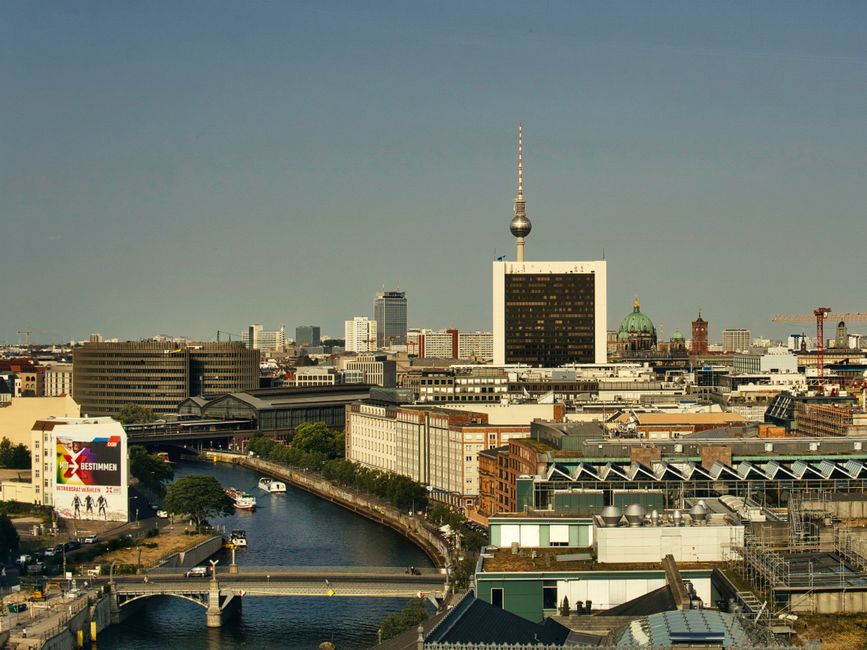
The optimism that characterised Berlin's business district just eighteen months ago has noticeably dimmed. Along the glass-fronted office towers of the Europaplatz and in the warehouses clustered around the Ostkreuz logistics hub, executives are grappling with a cascade of headwinds that show little sign of abating.
The numbers tell a sobering story. German export volumes have contracted by 3.2 per cent in the first half of 2026, with Berlin-based trading companies particularly exposed to emerging market volatility. Meanwhile, container shipping costs from the Port of Hamburg—Berlin's gateway to global trade—have spiked 18 per cent since January, eroding margins for businesses already operating on razor-thin efficiency.
"We're managing multiple crises simultaneously," explains the sentiment echoing through networking events at the Berlin Chamber of Commerce on Brüsseler Straße. Geopolitical fractures that seemed theoretical now carry immediate commercial consequences. Tensions in the Middle East and South Asia have disrupted established supply chains, forcing Berlin's automotive component suppliers and machinery manufacturers to scramble for alternatives or absorb additional costs.
Protectionist measures are reshaping trade architecture faster than many companies can adapt. Tariff walls that once seemed unlikely have materialised, while new regional trade blocs are fragmenting the seamless global market many German exporters took for granted. For the mid-sized technology firms clustered in Kreuzberg and the manufacturing operations in Spandau, this means higher compliance costs and reduced market access in key regions.
Currency volatility adds another layer of unpredictability. The euro's fluctuations against Asian currencies have made price-competitive positioning treacherous. A company that locked in prices three months ago may find itself underwater on contracts signed in good faith.
Perhaps most vexing is the supply chain fragility exposed by recent global disruptions. Whether earthquake-related shipping disruptions, port congestion, or energy supply constraints, the "just-in-time" model that powered German efficiency has revealed dangerous vulnerabilities. Building in redundancy and buffer stocks contradicts decades of lean manufacturing orthodoxy—and demands capital investment in an already constrained environment.
Yet Berlin's business community isn't paralysed. Rather, companies are reassessing their exposure, exploring nearshoring arrangements within Europe, and investing in supply chain visibility technology. The question hanging over the Kurfürstendamm and Unter den Linden isn't whether these challenges will pass—it's whether they represent a temporary shock or a structural realignment of global trade. For Berlin's export-dependent economy, getting that forecast right has never mattered more.
This article was compiled by AI from the sources linked above and screened before publishing. See our editorial standards.
How does this story make you feel?
Spread the word
About this article
Published by The Daily Berlin
Daily brief
Free, in your inbox before 7am. Weekdays.
More in Business


