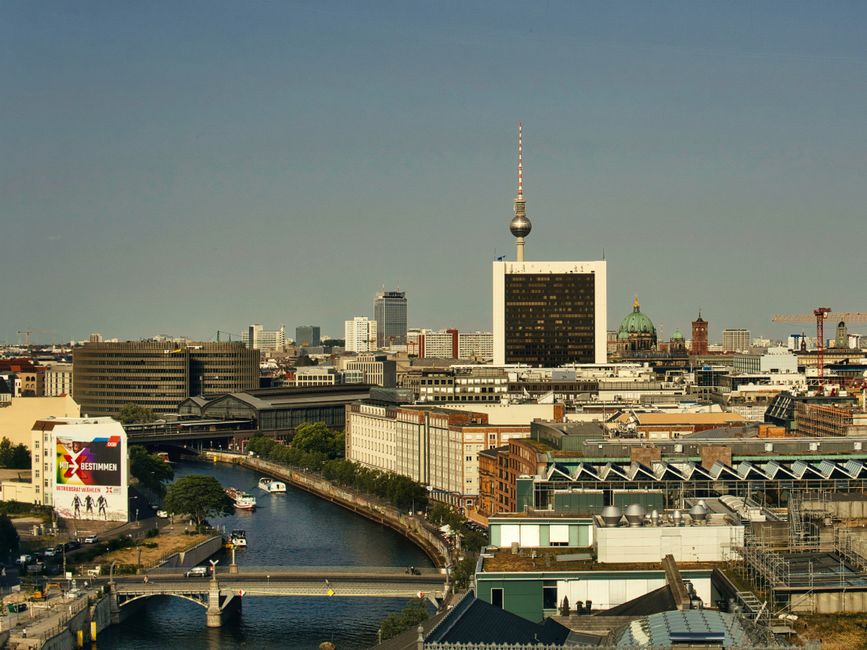
Walk into the converted warehouse on Mehringdamm in Kreuzberg on any given Tuesday, and you'll find the nerve centre of one of Berlin's most unlikely export successes. Beneath exposed brick and pendant lighting, teams huddle around blueprints for water purification systems destined for Lagos, solar micro-grids bound for Jakarta, and waste-processing equipment heading to São Paulo. This is the operational heart of SüstainWerk, a nine-year-old enterprise that has quietly become one of Germany's leading exporters of sustainable industrial technology to the Global South.
Founded in 2017 by engineer and former Siemens project manager Marcus Weber, SüstainWerk has grown from a two-person operation to a 320-person company with offices across four continents. Last year alone, the firm posted €180 million in international sales—a 34 per cent increase from 2024. Most striking: roughly 70 per cent of revenue now comes from Africa, South Asia, and Latin America, markets where German industrial exports have historically struggled to gain traction.
The company's breakthrough came from recognising a gap. While major multinationals like Siemens and ThyssenKrupp target wealthy nations with premium solutions, SüstainWerk engineered products specifically for cost-conscious municipalities and small manufacturers in developing economies. Their modular water treatment systems, for instance, cost roughly €45,000 compared to €300,000 for comparable European models—yet deliver 90 per cent of the performance at a quarter of the price.
In Berlin's notoriously startup-centric scene, SüstainWerk represents something rarer: a manufacturing-focused firm that exports physical goods rather than software or digital services. That distinction matters. While Berlin's tech sector captures headlines, Germany's strength has always rested on engineering prowess. SüstainWerk proves that legacy remains potent, especially when paired with innovation and market understanding.
The company's growth has rippled across the city's economy. They've established a training academy near Tempelhof that has certified over 800 technicians from partner countries in three years. Their supply chain partnerships have injected contracts worth €6 million annually into small manufacturers across Brandenburg and Saxony-Anhalt. And they've become a magnet for talent—the Kreuzberg office recruits engineers from two dozen countries, reflecting both Berlin's cosmopolitanism and the global nature of sustainable development challenges.
As traditional trade routes face pressure from geopolitical tensions and tariff uncertainty, SüstainWerk's success offers a template: German engineering directed toward genuine developing-world needs, delivered at accessible price points, with local expertise embedded throughout. In 2026's fractured global marketplace, that formula is proving extraordinarily durable.
This article was compiled by AI from the sources linked above and screened before publishing. See our editorial standards.