Berlin's Office Market Sends Mixed Signals: What Economic Indicators Really Tell Us About Investment Flows
As vacancy rates climb and rents stabilise, property experts decode the forces reshaping Berlin's commercial real estate landscape.
As vacancy rates climb and rents stabilise, property experts decode the forces reshaping Berlin's commercial real estate landscape.
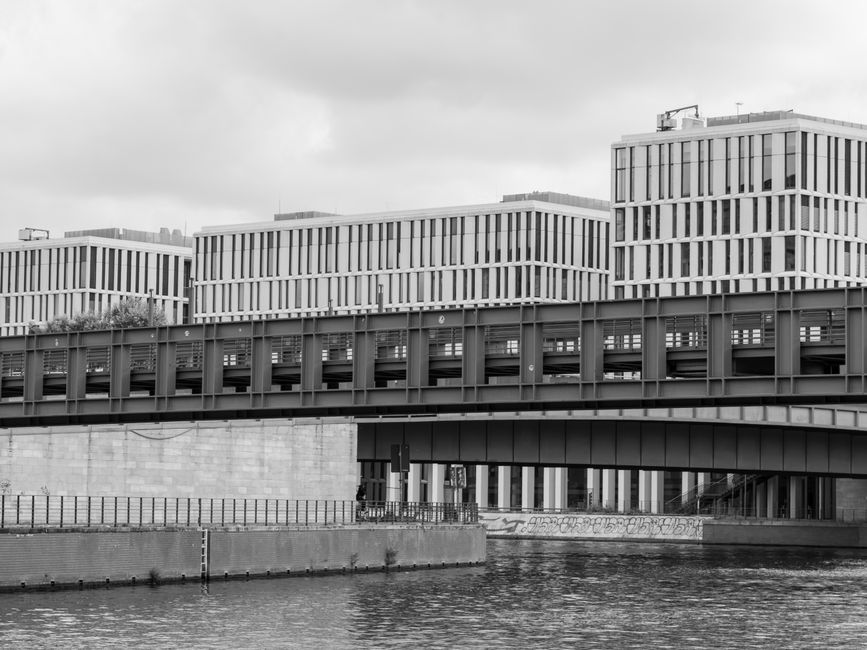
Berlin's commercial property market is sending contradictory messages to investors and occupiers alike. Office vacancy rates in central districts have reached 8.2 per cent—the highest in over a decade—yet institutional capital continues flowing into prime locations. Understanding this paradox requires parsing the economic indicators that drive investment decisions across the city's neighbourhoods.
The story begins with rising borrowing costs. The European Central Bank's interest rate regime has fundamentally altered the calculus for property investors. Where €1 million of office space in Mitte or Charlottenburg commanded premium prices five years ago, yield expectations have shifted dramatically. A prime office property on Friedrichstrasse that might have traded at 3.5 per cent net yield in 2022 now requires closer to 5 per cent to attract buyers. This mechanical relationship—higher rates equal lower property values—explains why transaction volumes fell 34 per cent year-on-year through the first half of 2026.
Yet the picture becomes more nuanced when examining occupational demand. Tech companies, legal firms, and consulting practices continue clustering around Kreuzberg and Neukölln, driving rents upward in these submarkets even as peripheral districts struggle. Average rents in Mitte have stabilised at €28-32 per square metre annually, while South Kreuzberg commands €35 per square metre for newly refurbished space. This concentration reflects economic fundamentals: knowledge-intensive sectors remain concentrated in Berlin, and they're willing to pay for proximity to talent pools and clients.
What matters most for investment flows, however, is the divergence between headline vacancy and functional scarcity. Many vacant spaces occupy older buildings requiring substantial renovation. New construction completed in the past 18 months—particularly the refurbished office complex at Gleisdreieck—achieved 95 per cent occupancy within nine months. German institutional investors, particularly pension funds and life insurers, have recognised this distinction. Rather than chasing headline yields, they're selectively acquiring well-positioned assets in established neighbourhoods and patient-capital renovations.
The €850 million invested in Berlin commercial property during the first quarter of 2026 represents a 12 per cent increase from the same period last year, even as overall transaction volumes contracted. This apparent contradiction reflects capital concentration: fewer, larger deals on better assets. International investors from France, the Netherlands, and Scandinavia have actually increased their Berlin exposure, counterbalancing German domestic capital's caution.
For businesses evaluating office relocations, the message is clear: premium locations in established submarkets offer genuine scarcity value, while secondary addresses face genuine downward pressure. Economic indicators suggest this bifurcation will persist through 2027.
This article was compiled by AI from the sources linked above and screened before publishing. See our editorial standards.
How does this story make you feel?
Spread the word
About this article
Published by The Daily Berlin
Daily brief
Free, in your inbox before 7am. Weekdays.
More in Business