Global Instability Is Reshaping Berlin's Startup Funding – And Fast
As geopolitical tensions mount worldwide, Berlin's innovation district faces a reckoning over risk appetite, talent mobility, and the future of cross-border investment.
As geopolitical tensions mount worldwide, Berlin's innovation district faces a reckoning over risk appetite, talent mobility, and the future of cross-border investment.

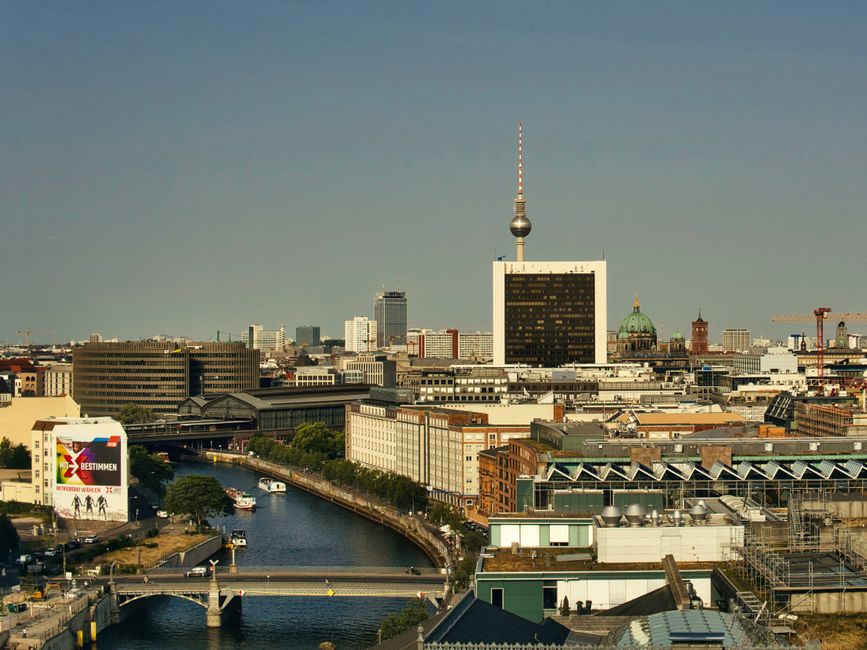
Berlin's startup ecosystem has long thrived on a contradiction: deep pockets from global investors coupled with a fiercely independent, risk-tolerant founder culture. That balance is shifting, and the shifts are being felt acutely in Kreuzberg, Friedrichshain, and along the Spree corridor where thousands of early-stage companies cluster.
The geopolitical backdrop is impossible to ignore. Rising US-Iran tensions, regional conflicts across multiple continents, and unprecedented political volatility are forcing venture capitalists to recalibrate their exposure to emerging markets—and to reconsider their bets on founders with complex international supply chains or cross-border team structures. For Berlin, a city where roughly 40 percent of startup founders are non-German, this creates immediate friction.
"We're seeing slower decision cycles," says a partner at one of Mitte's largest VC firms, reflecting a sentiment widespread across the community. Major tech funds have tightened due diligence processes. Round closures that moved in weeks now stretch to months. Valuations, particularly for B2B software and deeptech companies with heavy international exposure, have softened by 15-20 percent compared to early 2026.
The pressure is visible on the ground. Co-working spaces like Ahoy in Kreuzberg and Workspace operators across Friedrichshain report steady demand, but ancillary service providers—immigration consultants, visa specialists, international accounting firms—are experiencing a secondary rush. Founders are urgently restructuring their hiring plans, pulling back on European expansion, and accelerating German residency paperwork for key talent.
Bank transfer fees and currency volatility have also spiked operational costs. A Berlin healthtech startup with operations in three countries reported a 12 percent increase in administrative expenses since January alone, largely from forex hedging and compliance overhead.
Yet the crisis carries opportunity. Several established Berlin firms are actively recruiting experienced operators from more volatile markets, betting that talent arbitrage will persist. Regulatory clarity around data privacy and AI governance—areas where Germany and the EU remain ahead of global competitors—has become a tangible competitive advantage in pitches to international investors.
The Startup Hub Berlin and other industry bodies are convening discussions on how to shield the ecosystem from external shocks while remaining globally connected. The consensus: the city's future depends on proving that Berlin can compete while managing complexity. For now, founders here are learning that global ambition comes with genuine, not theoretical, risk.
This article was compiled by AI from the sources linked above and screened before publishing. See our editorial standards.
How does this story make you feel?
Spread the word
About this article
Published by The Daily Berlin
Daily brief
Free, in your inbox before 7am. Weekdays.
More in Business