Berlin's Office Shakeout Is Rewriting the Rules for Who Gets Hired and Where
As landlords slash rents and tenants trade Mitte prestige for Friedrichshain pragmatism, the city's talent market is bending to fit a new commercial property reality.
As landlords slash rents and tenants trade Mitte prestige for Friedrichshain pragmatism, the city's talent market is bending to fit a new commercial property reality.
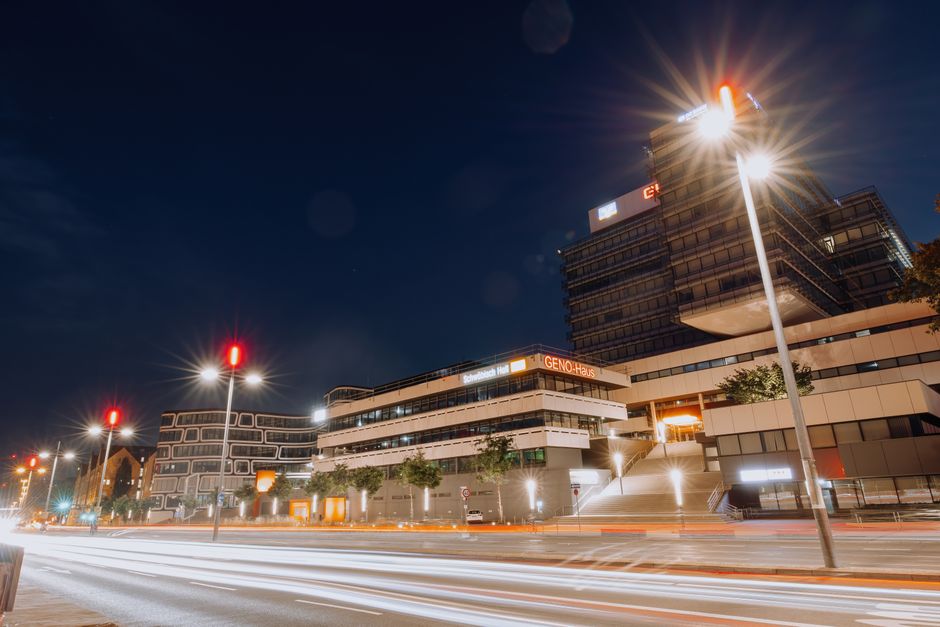
Berlin's office vacancy rate climbed to 7.4 percent in the first quarter of 2026, the highest level the city has recorded since reunification-era restructuring reshaped its commercial districts in the mid-1990s. That single number is doing more damage, and creating more opportunity, in the Berlin labour market than most hiring managers want to admit.
The vacancy surge matters right now because it is arriving precisely when European employers are fighting hardest for skilled workers. With Poland warning of escalating security threats to the east and energy costs still volatile after two years of Russian supply disruption, companies that locked into expensive Mitte leases at peak 2022 prices are being forced to make brutal choices: cut headcount, relocate, or renegotiate. All three options are reshaping which workers Berlin wants, and where it wants them to show up.
The pressure is most visible along Friedrichstraße, where three flagship office blocks that were fully let eighteen months ago now carry vacancy notices from JLL and CBRE. Prime rents in central Berlin have softened to roughly €42 per square metre per month, down from a 2023 peak above €48. That gap, modest on paper, is significant enough to push mid-sized tech and consulting firms toward Friedrichshain and Prenzlauer Berg, where comparable space can be had for €28 to €32 per square metre.
The practical effect on hiring is direct. WeWork's former Europa Center location near Tauentzienstraße, which closed its doors to tenants in late 2025, has been partially reoccupied by a cluster of smaller logistics-tech firms that specifically recruited engineers and operations staff from the surrounding Charlottenburg-Wilmersdorf borough rather than the traditionally dominant Mitte talent pool. Proximity to home has become a negotiating chip. Several Berlin-based recruitment firms, including Hays Germany's local office on Kurfürstendamm, report that candidates in 2026 are asking about commute times in the first call, not the third.
The Berlin Senate's economic development agency, Berlin Partner für Wirtschaft und Technologie, has been tracking the dislocation since January. Its data shows that roughly 340,000 square metres of office space across Mitte, Tiergarten and parts of Kreuzberg sat underutilised in the first half of this year. Berlin Partner has responded with a conversion subsidy programme that offers landlords up to €150 per square metre toward repurposing vacant offices into co-working hubs with subsidised desks for startups, essentially a public attempt to stop talent from migrating to Hamburg or Munich when Berlin employers can no longer justify the rents.
The churn is creating distinct winners and losers in the talent market. Property managers, workplace strategists and commercial leasing specialists are in demand that the market has not seen for years, with Immobilienscout24 listings for such roles up roughly 60 percent year on year. Conversely, office support and facilities staff whose roles were anchored to single-site prestige locations are finding that those locations no longer exist in their previous form.
Employers willing to move fast have a genuine window. Landlords at developments like Zalando's former Viertel Zwei expansion site near the Warschauer Straße S-Bahn station are offering rent-free periods of up to six months to attract anchor tenants, a concession that was essentially unthinkable during the 2019-to-2022 boom. A company that signs now, bundles that saving into its compensation budget and plants a flag in a neighbourhood with good transit links, the U5 extension through Alexanderplatz still draws workers from the eastern boroughs efficiently, can outbid rivals on salary without technically spending more.
The harder question is structural. Berlin has watched Paris and Amsterdam use office-market corrections to accelerate mixed-use development, effectively turning underperforming commercial blocks into live-work districts that anchor long-term talent retention. Berlin Partner's conversion programme is the first serious step in that direction here, but with subsidy funding capped at €40 million for the full 2026 fiscal year, the gap between ambition and execution remains wide. Companies making location decisions before year-end should monitor the Senate's next budget round in September, that vote will determine whether the conversion incentives scale up or quietly expire.
How does this story make you feel?
Spread the word
About this article
Published by The Daily Berlin
Daily brief
Free, in your inbox before 7am. Weekdays.
More in Business


