Market Souls: The Vendors and Dreamers Behind Berlin's Best Local Finds
From Kreuzberg's Sunday markets to Charlottenburg's vintage quarters, the faces behind the stalls reveal why Berliners keep coming back.
From Kreuzberg's Sunday markets to Charlottenburg's vintage quarters, the faces behind the stalls reveal why Berliners keep coming back.
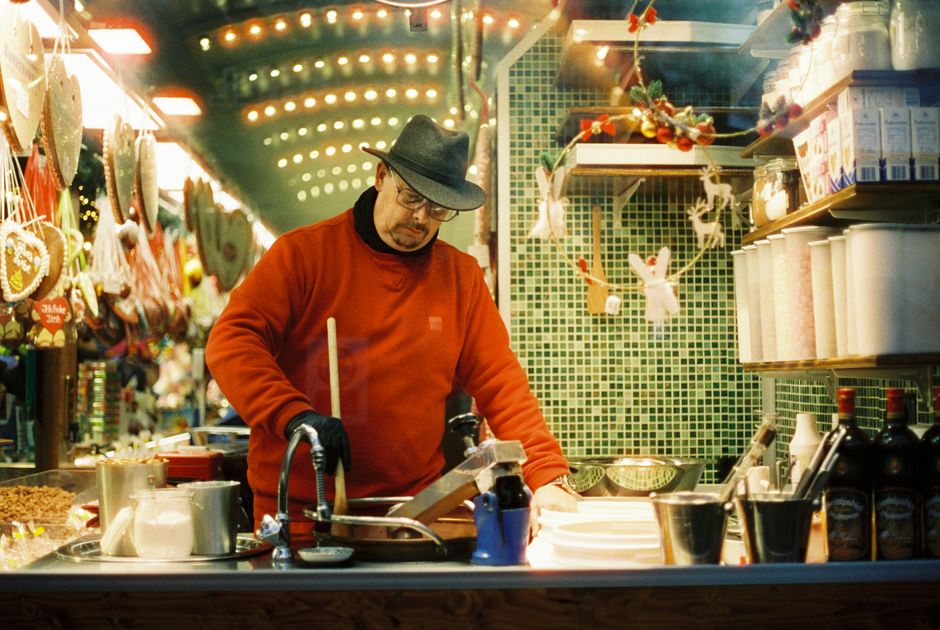
Every Sunday morning, before the crowds arrive at Markthalle Neun in Friedrichshain, vendor prep is already underway. By 10 a.m., the corrugated-iron hall transforms into a sensory carnival where perhaps 60 independent sellers—many of them second-generation market traders or recent arrivals to the city—lay out everything from organic vegetables to upcycled clothing. The market has hosted Street Food Thursday since 2011, drawing an estimated 15,000 visitors weekly in summer. Yet what keeps locals returning isn't just the sourdough or Korean street snacks; it's the constellation of relationships built across decades of Saturday handshakes and Sunday conversations.
Walk north into Wedding, and the texture shifts entirely. Along Müllerstrasse—a kilometre-long retail spine that feels like a time capsule of Berlin's divided past—independent shopkeepers have resisted chain homogenization. A family-run haberdashery operating since 1987 shares the street with newer arrivals: a zero-waste refill shop opened by a former architect in 2021, a vintage bookstore run by a retired teacher. These aren't Instagram-worthy minimalist displays. They're cluttered, lived-in spaces where staff know regulars by name and remember what they bought three months ago.
The economics tell a complicated story. Berlin's retail rents have climbed roughly 8-12 percent annually since 2020, squeezing smaller operators even as the city's population approaches 3.7 million. Yet a resilient ecosystem persists. The Flohmarkt am Mauerpark in Prenzlauer Berg, operating twice weekly, attracts 3,000-4,000 people per event, many of them permanent vendors who've occupied the same pitches for five, ten, sometimes fifteen years. The market functions as a intergenerational stage: pensioners selling inherited furniture alongside young entrepreneurs testing business ideas.
What distinguishes these spaces from standardized mall environments is a particular kind of friction—the possibility of real encounter. In Neukölln's Kottbusser Tor district, cramped vintage shops and ethnic groceries serve as informal community nodes. A Turkish spice merchant's stall is where neighbourhood residents practice broken German and trade recipes. A Polish deli owner has quietly become a social anchor for a neighbourhood navigating rapid demographic change.
Berlin's markets and independent retail strips remain economically precarious. Gentrification pressures are real. Yet they endure because they offer something mass retail cannot: genuine human presence. In a city still negotiating its fractured history, these ordinary commercial spaces serve an unexpected function. They're where strangers become neighbours, where transactions become relationships, where the city's diversity achieves its most tangible form.
This article was compiled by AI from the sources linked above and screened before publishing. See our editorial standards.
How does this story make you feel?
Spread the word
About this article
Published by The Daily Berlin
Daily brief
Free, in your inbox before 7am. Weekdays.
More in lifestyle