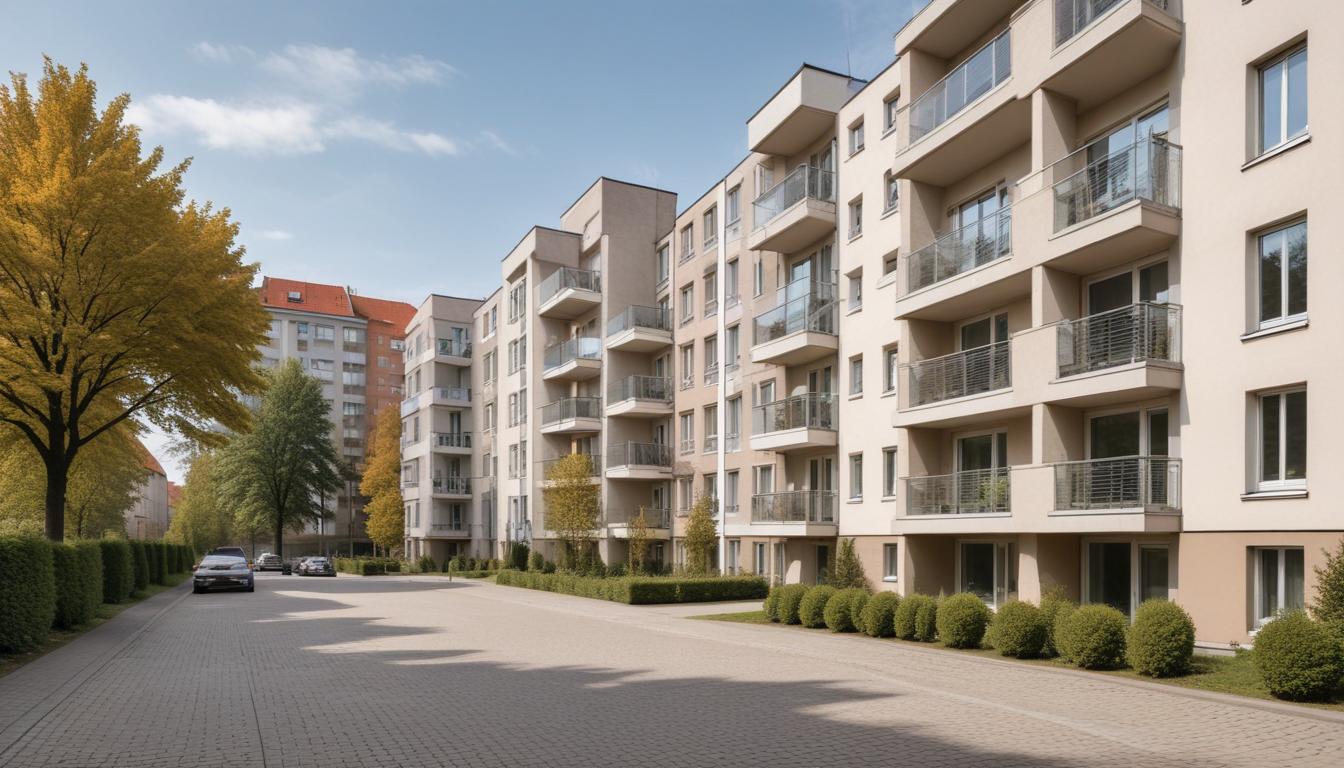
Berlin's Spandauer Vorstadt has long traded on heritage and bohemia, but the neighbourhood is entering a new chapter. Three significant development projects currently under way promise to recalibrate the district's character entirely, offering both opportunity and concern for residents and investors alike.
The most visible transformation centres on the Torstraße corridor, where a €180 million mixed-use complex is nearing completion. The project combines 240 residential units—roughly 40 per cent designated as social housing under Berlin's new quotas—with retail, co-working space, and a public plaza. Developers project average asking rents of €6,800 per square metre, a 23 per cent premium over the current Mitte baseline of €5,500, reflecting the neighbourhood's accelerating gentrification.
Simultaneously, regeneration work near Hackescher Markt is breathing new life into the area's courtyard system. The Hof-Gemeinschaft initiative, backed by the Senate's housing department, aims to preserve the district's architectural heritage whilst modernising infrastructure. Early indicators suggest preserved units will rent at around €6,200 per sqm—still elevated, but more moderate than greenfield developments.
A third project—a cultural and residential hub on a former industrial site near the Spree—signals something different. Scheduled to open in early 2027, it combines artist studios, a 300-seat performance venue, and 80 apartments explicitly priced for creative professionals earning under €45,000 annually. It's a rare counterweight to market pressures.
What do these developments mean for the neighbourhood? Economically, they're cementing Spandauer Vorstadt's transformation from affordable creative quarter into a premium residential and commercial destination. Rents are likely to stabilise around €6,500–€7,000 per sqm within 18 months, placing it closer to Prenzlauer Berg territory than its current mid-market position.
Socially, the outcomes depend entirely on implementation. If the 40 per cent social housing quota is enforced rigorously—and if the cultural hub succeeds—some mixed-income character may survive. Local tenants' associations and the Senat's housing department are closely monitoring compliance. However, rising commercial rents along Torstraße are already forcing smaller galleries and independent cafés to relocate eastward, towards Friedrichshain.
For investors, the timing is delicate. Entry prices below €6,000 per sqm are vanishing fast. Those betting on further appreciation towards €7,500 within three years may find willing buyers; those seeking rental yield should expect compression as supply increases. The neighbourhood's desirability is genuine, but the window for value-play investment is closing.
The question facing Berlin's planning authorities remains urgent: can new development coexist with the creative, intergenerational identity that made Spandauer Vorstadt worth developing in the first place?
This article was compiled by AI from the sources linked above and screened before publishing. See our editorial standards.