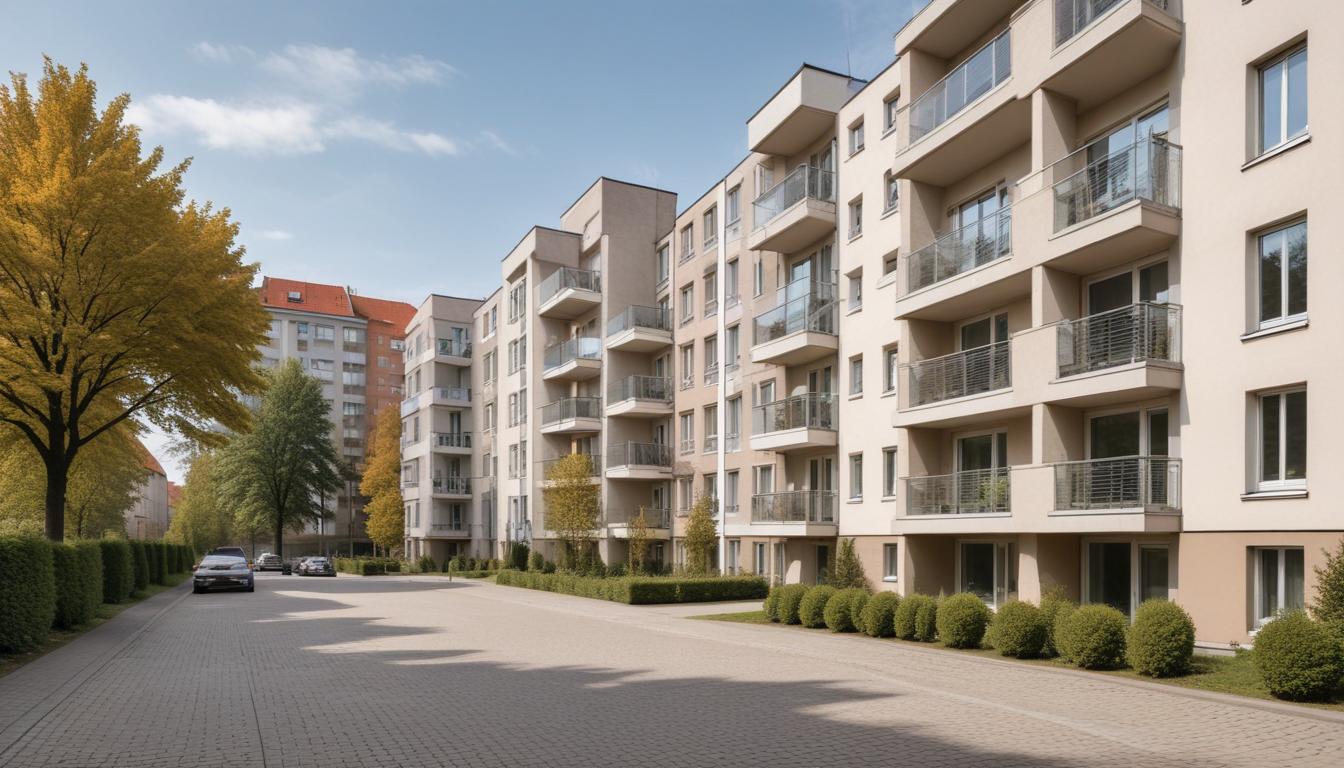
Berlin's ultra-premium property sector is experiencing an unprecedented recalibration. While the city's average price per square metre hovers around €5,500, luxury developments in prestigious postcodes like Mitte and Charlottenburg command €12,000–€18,000/sqm. Yet recent planning interventions are fundamentally altering the rules of the game.
The Senat's revised heritage protection ordinance, introduced in April 2026, has tightened conversion criteria for Gründerzeit properties along Unter den Linden and surrounding Mitte streets. Developers seeking to subdivide historic Wilhelmine-era townhouses into luxury apartments now face stricter architectural compliance reviews and extended approval timelines—sometimes adding 18–24 months to project schedules. Several high-profile residential conversions in the Scheunenviertel have been significantly redesigned or delayed as a result.
Simultaneously, new mixed-use zoning mandates in Charlottenburg-Wilmersdorf require developers to incorporate public-access commercial space in new prestige residential projects. One marquee development near the Charlottenburg Palace has had to allocate nearly 15% of its ground-floor footprint to retail or cultural use, effectively reducing luxury unit counts by an estimated €8–12 million in total revenue.
These aren't marginal adjustments. The luxury market typically thrives on density and discretion; planning friction introduces both cost and uncertainty. Yet some stakeholders argue these measures are necessary. Berlin's housing advocacy organisations, alongside the Tenants' Association (Mieterverein Berlin), have pushed for guardrails against speculative conversion of residential stock, particularly in Prenzlauer Berg and Friedrichshain-Kreuzberg, where gentrification pressure remains acute.
Market data tells a nuanced story. Prestige property sales in Mitte fell 12% year-on-year in Q1 2026, according to preliminary Makler data, though this reflects both planning uncertainty and broader economic caution rather than diminished demand among ultra-high-net-worth buyers. Charlottenburg, by contrast, has seen modest resilience—perhaps because its newer planning framework, though restrictive, at least provides clarity.
Pankow's emergence as a secondary prestige destination may be partly attributable to lighter planning requirements. Several developers have quietly shifted focus northward, where contemporary development approval timelines remain shorter and heritage overlays less stringent.
For luxury investors, the message is clear: Berlin's permitting landscape is hardening. The days of rapid, high-margin conversions in premium central locations appear to be waning. Projects that can navigate regulatory complexity—or locate in less-restricted districts—will define the next cycle of Berlin's ultra-premium market.
This article was compiled by AI from the sources linked above and screened before publishing. See our editorial standards.