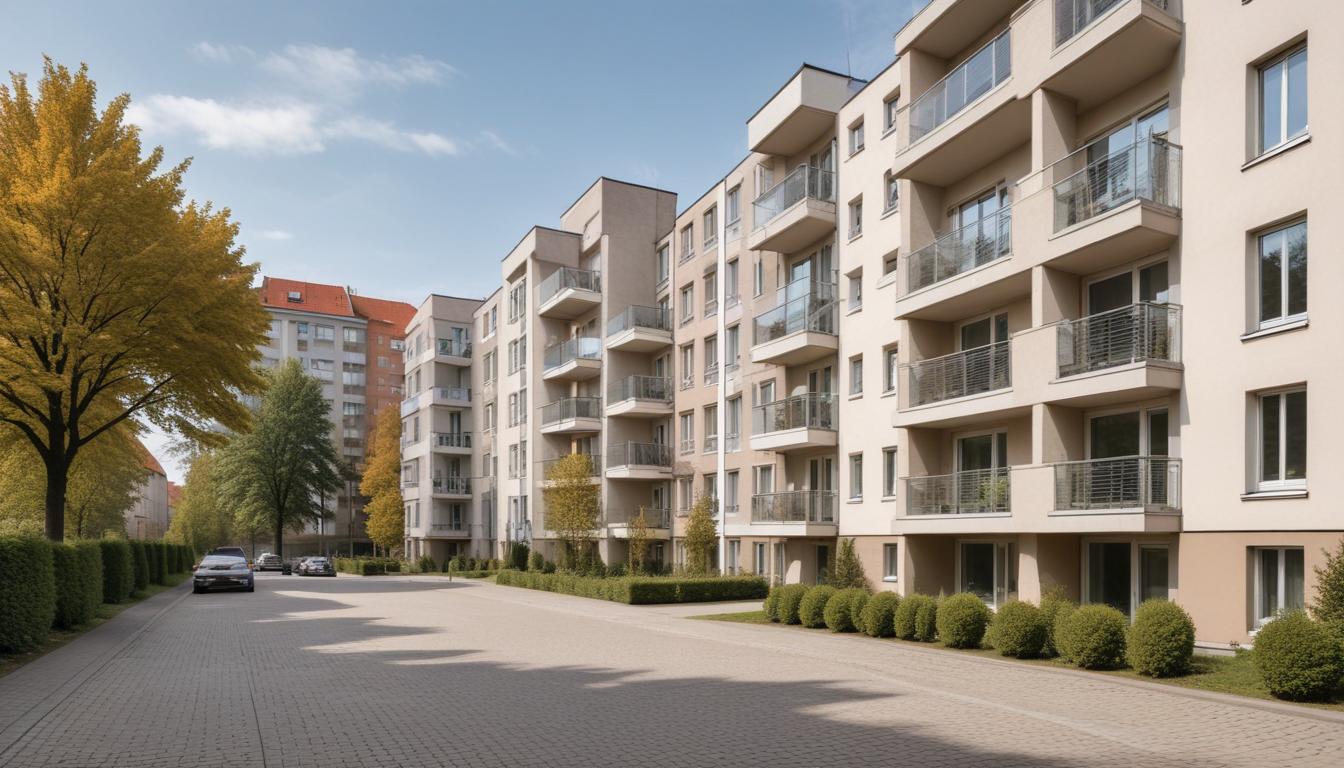
Berlin's property market is experiencing a decisive realignment. While the city's premium neighbourhoods remain anchored around €7,000–€8,500 per square metre, the real momentum is now concentrated in secondary and tertiary zones where transport connectivity and cultural density are reshaping valuations faster than many investors realise.
Pankow has emerged as the standout performer. Once overlooked by serious buyers, the district now commands €5,800–€6,400/sqm in sought-after pockets like Prenzlauer Berg's quieter eastern extensions around Schönhauser Allee and the Kulturbrauerei cultural hub. The catalyst? Direct U2 and M4 tram access to Alexanderplatz, combined with a younger demographic migrating away from overcrowded Friedrichshain-Kreuzberg. Young families are particularly active here, drawn to larger flats and lower entry prices—typically €50,000–€80,000 less than equivalent Mitte stock.
Friedrichshain-Kreuzberg, long the creative quarter, faces a paradox. RAW-Gelände's ongoing transformation and the established venue circuit around Warschauer Straße continue to attract investors, yet prices have plateaued at €5,200–€5,900/sqm as gentrification fatigue sets in and younger artists relocate northward. This cooling presents contrarian opportunities for patient capital.
The most critical driver across all districts remains transport infrastructure. Districts within 15 minutes of Hauptbahnhof or Friedrichstraße command sustained premiums. Similarly, proximity to established cultural anchors—the Volksbühne, Berlinale venues, or emerging food-hall projects—creates valuation floors even during market softness.
Regulatory environment matters enormously. Berlin's tenant protections remain Europe's strongest, limiting landlord flexibility but underpinning renter demand and therefore property desirability. Investors should factor this into yield expectations; gross rents of 3.5–4.2% are realistic, not the 5%+ seen in Frankfurt or Munich.
New buyers face three hard truths. First, the €5,500/sqm city average masks significant micro-location variance; street-level research is non-negotiable. Second, mortgage availability has tightened; banks now require 25–30% equity deposits. Third, the window for sub-€6,000/sqm acquisitions in genuinely connected neighbourhoods is narrowing—Lichtenberg and Marzahn, while still affordable at €4,200–€4,800/sqm, remain peripheral despite improving U5 extensions.
The smart play is neither the prestige postcodes nor the speculative fringe, but districts where transport, culture and demographic momentum align. Pankow fits that profile today. In 18 months, it may not.
This article was compiled by AI from the sources linked above and screened before publishing. See our editorial standards.