Berlin's Next Wave: How New Development Projects Are Reshaping Neighbourhoods
From Charlottenburg to Köpenick, major construction approvals signal a shift in where Berlin's growth is heading—and what it will cost residents.
From Charlottenburg to Köpenick, major construction approvals signal a shift in where Berlin's growth is heading—and what it will cost residents.
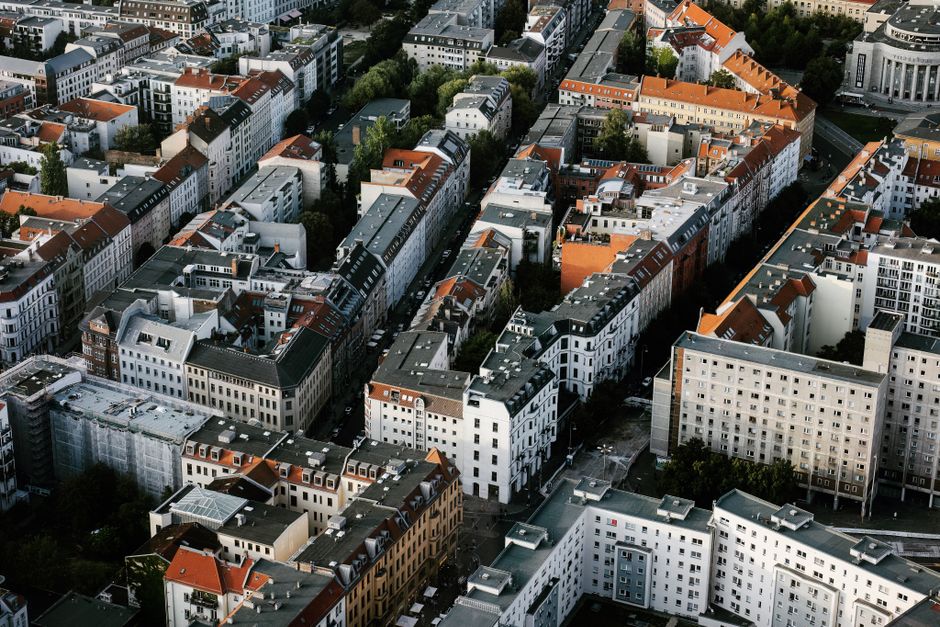
Berlin's planning department has greenlit an unusually dense cluster of residential and mixed-use developments across the city's outer rings, marking a significant departure from the capital's decade-long focus on central regeneration. The approvals, processed through 2025 and early 2026, suggest the property market is finally decoupling from Mitte's gravitational pull.
The most visible shift is occurring along the Spree's industrial stretches in Friedrichshain and Köpenick, where former manufacturing zones are being converted into residential complexes with retail bases. A 340-unit scheme near the Ostkreuz railway junction—approved in March—will introduce contemporary apartments at an estimated EUR 6,200 per square metre, slightly above the city average but significantly below central Mitte's EUR 9,800. This pricing signals developers' confidence that outer-ring neighbourhoods can absorb premium prices without triggering the speculative frenzy that characterised Kreuzberg five years ago.
Pankow continues its trajectory as the city's growth engine. Three consecutive approvals in the Prenzlauer Berg-adjacent areas around Kollwitzstrasse and into the quieter Stadtrandbezirk Blankenburg have released approximately 850 housing units into the pipeline. Local housing organisations report strong rental demand in these zones, with average rents climbing to EUR 14 per square metre—a 12 per cent increase since 2024—while still remaining affordable by Western European standards.
The regulatory environment, however, remains fraught. Berlin's strict tenant protection laws continue to constrain developer enthusiasm for smaller projects. Approval timelines have stretched to 18–24 months for standard residential applications, creating bottlenecks that favour large institutional investors over mid-sized builders. The city's planning authority has acknowledged the backlog, attributing delays to heightened environmental and heritage assessments introduced after the 2023 regulatory tightening.
What these approvals mean on the ground varies sharply by neighbourhood character. In Charlottenburg, a 220-unit project near the palace grounds has triggered considerable local opposition, with residents concerned about parking pressure and heritage integrity. Conversely, Köpenick's development has met less resistance, partly because the area lacks the entrenched community networks that defend against perceived gentrification in Kreuzberg or Wedding.
The overarching pattern is clear: Berlin's development frontier is moving eastward and northward. Central districts have effectively reached saturation, while transport corridors—particularly the S-Bahn lines extending toward Potsdam and Brandenburg—are attracting fresh capital. By 2028, these approvals should add roughly 3,200 units to Berlin's housing stock, modest by international standards but consequential for a city still processing its post-reunification identity.
This article was compiled by AI from the sources linked above and screened before publishing. See our editorial standards.
How does this story make you feel?
Spread the word
About this article
Published by The Daily Berlin
Daily brief
Free, in your inbox before 7am. Weekdays.
More in Property