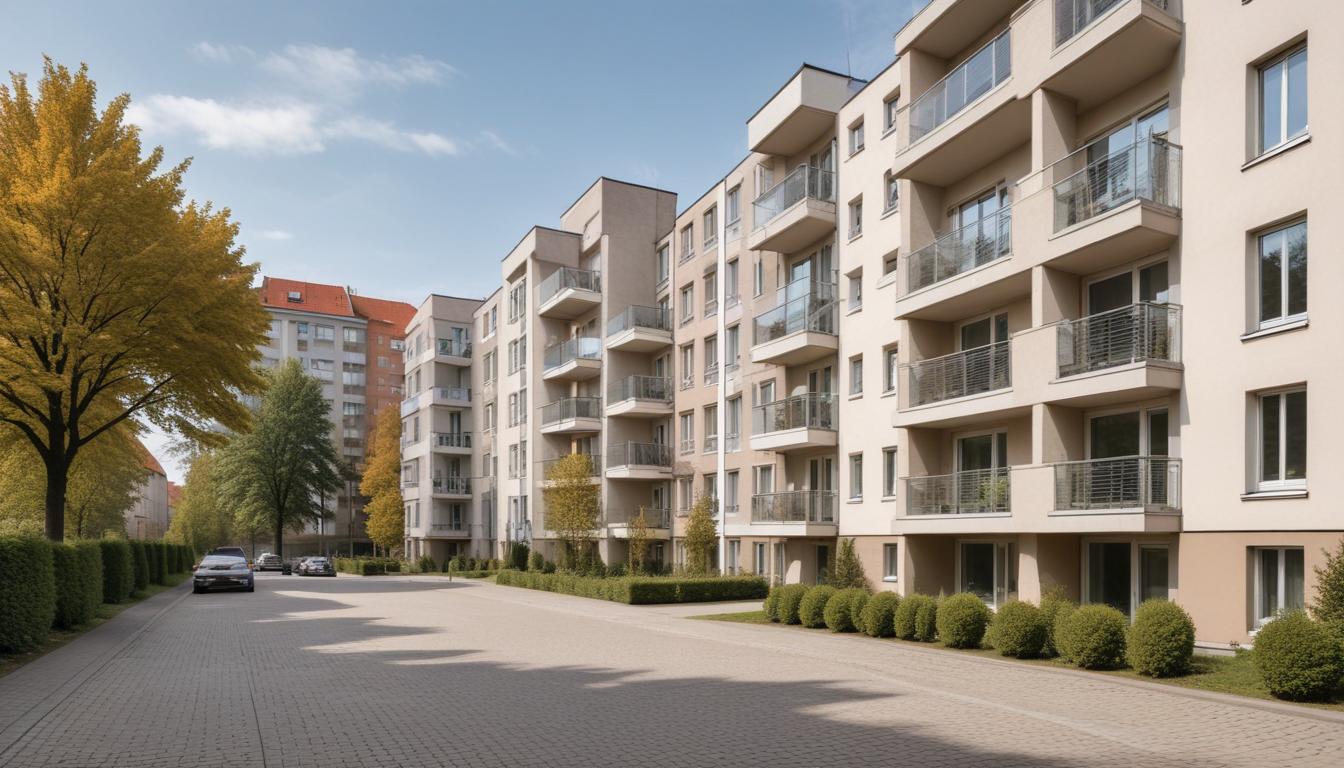
Berlin's Housing Squeeze: What's Pushing Prices Up and What Buyers Need to Know Right Now
As supply tightens and investor demand surges, understanding the forces reshaping Berlin's property market has never been more critical for prospective buyers.
As supply tightens and investor demand surges, understanding the forces reshaping Berlin's property market has never been more critical for prospective buyers.
Berlin's property market is at an inflection point. After years of relative affordability that attracted international buyers and young professionals, the city is experiencing a sharp realignment—one that demands savvy navigation from anyone considering a purchase in 2026.
The headline figure tells part of the story: the city's average price per square metre now sits around €5,500, a jump from the pandemic lows that defined the early 2020s. But averages obscure the real drama playing out across neighbourhoods. In Mitte and Prenzlauer Berg, where renovation-ready pre-war apartments on streets like Weinbergsweg and Kollwitzstrasse have become prizes, prices routinely exceed €8,000 per sqm. Meanwhile, Pankow—once overlooked—has emerged as a growth frontier, with properties appreciating 8-12 per cent annually as families and remote workers seek space beyond the tourist-heavy core.
Three factors are colliding to reshape affordability. First, institutional investors have returned en masse. After regulatory uncertainty in the early 2020s, investment funds are now competing aggressively for portfolios, particularly around Friedrichshain-Kreuzberg's cultural venues and the emerging tech corridors near Ostkreuz. Second, supply remains constrained. Berlin's ambitious housing targets—160,000 new units by 2040—sound impressive until you consider current completion rates and the city's rigid tenant protections, which dissuade some developers. Third, interest rates, while easing slightly from 2024 peaks, remain elevated enough to compress affordability for ordinary buyers while favoring cash-rich investors.
For buyers navigating this environment, the calculus has shifted. The entry point to Mitte—once achievable for dual-income professionals—now typically requires €500,000 minimum for a one-bedroom. Pankow's relative value is attracting strategic buyers willing to sacrifice central-location cachet for equity growth. And throughout the city, off-market deals are increasingly common, with estate agents and networks handling transactions before properties reach major portals.
Regulatory headwinds deserve attention. Berlin's tenant laws remain among Europe's strictest, protecting renters but occasionally complicating investment mathematics. Buyers should factor in realistic rental yields—typically 3-4 per cent—rather than speculating on capital appreciation alone.
The smart money recognises that Berlin's appeal has fundamentally shifted. It's no longer the bargain destination it was five years ago. Instead, it's becoming a mature property market where location precision, condition assessment, and understanding buyer motivation matter more than ever. For those with capital and patience, opportunities remain—just not everywhere, and not at the prices many prospective buyers remember.
This article was compiled by AI from the sources linked above and screened before publishing. See our editorial standards.
How does this story make you feel?
Spread the word
About this article
Published by The Daily Berlin
Daily brief
Free, in your inbox before 7am. Weekdays.
More in Property