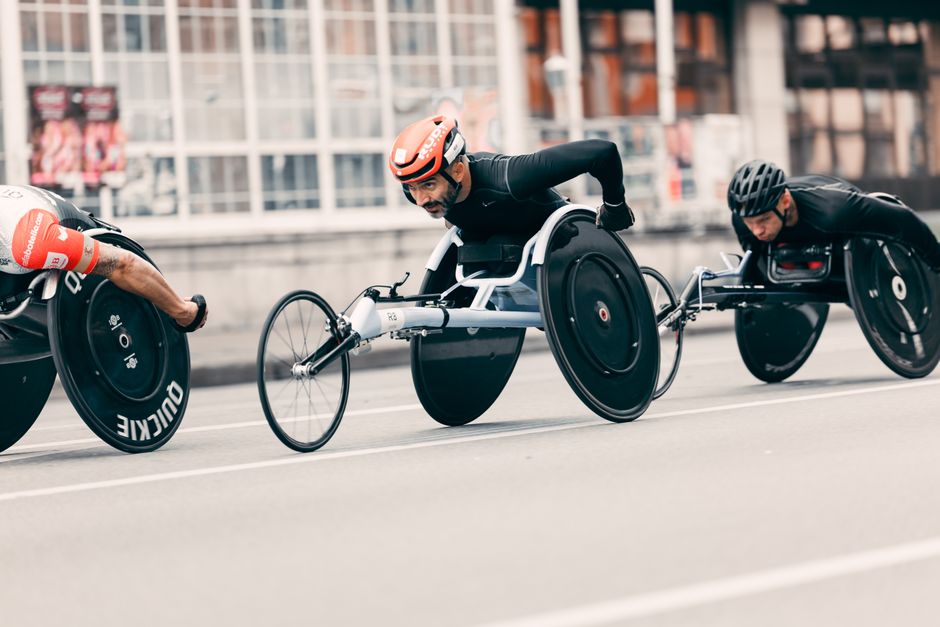
Berlin now has more registered endurance athletes than at any point in its history. The Landessportbund Berlin, the city's umbrella sports federation, counted over 94,000 active members in running, cycling and triathlon clubs as of January 2026 — a 17 percent jump since 2023. That number does not include the tens of thousands who train independently, clogging paths along the Spree and circling Tempelhofer Feld on weekend mornings without ever joining a club.
The surge matters because the city's infrastructure was not built for this volume. Bike lanes on Frankfurter Allee are patched and narrow. The 6-kilometre perimeter loop at Tempelhofer Feld — probably the most used free training circuit in Germany — has no dedicated lane separation between cyclists doing threshold intervals and parents pushing double buggies at a walking pace. On Saturday mornings before 9 a.m., it is genuinely dangerous.
What the City Has, and What It Lacks
The good news is that Berlin does have serious infrastructure in patches. The Velodrom in Prenzlauer Berg, a 250-metre certified indoor track operated by the city through Alba Facility Management, reopened after a €4.2 million refurbishment in March 2026 and is now bookable by clubs for as little as €18 per lane-hour during off-peak slots. Triathlon Berlin e.V., one of the largest multisport clubs in the country with roughly 1,400 members, runs track sessions there every Tuesday evening. The Velodrom also hosts the Berlin Six Day Race each January, which means serious scheduling conflicts for club bookings during winter months.
Open-water swimming — the discipline that consistently causes the most logistical grief for triathletes — has one reliable legal venue: the Wannsee Strandbad in Zehlendorf, where marked swim lanes are available from May through September. Entry costs €6.50 for adults. The problem is that Müggelsee in Köpenick, the other obvious candidate and genuinely faster water for training due to calmer conditions, remains formally off-limits for unsupported open-water swimming under Berlin's bathing regulations, despite repeated lobbying from the triathlon community since at least 2021. The Berliner Senatsverwaltung für Mobilität, Verkehr, Klimaschutz und Umwelt has acknowledged correspondence from Triathlon Berlin on the matter but has issued no concrete timeline for a policy review.
For runners, the Tiergarten remains the gold standard — roughly 210 hectares of connected path, mostly soft surface, centrally located. The Volkspark Friedrichshain in the east offers a hillier 3.5-kilometre loop that coaches from Laufclub Berlin-Mitte use for tempo work. Grunewald, at nearly 3,000 hectares, is where trail runners and ultra-distance athletes head, particularly the marked Forstweg networks around Hundekehlensee. The annual Berliner Mauerweglauf, a 160-kilometre ultramarathon following the former Wall route, has used those trails as part of its course since 2009.
What Comes Next
The Senate's Stadtentwicklungsplan Sport 2030, a long-range planning document published in late 2024, earmarks €12 million for cycling and endurance sport infrastructure improvements over the next four years. Tempelhofer Feld is explicitly named, with plans for a separate high-speed cycling lane on the western apron of the former airfield — a project that would require amending the 2014 citizens' referendum protections that govern development on the site. That is not a small political lift.
Practically speaking, athletes training for the Berlin Triathlon in August 2026 or the BMW Berlin Marathon in September should plan their infrastructure accordingly. Velodrom bookings for August are already tight — check the online portal through Alba's website at least six weeks out. Wannsee swim sessions before 8 a.m. are significantly less crowded than midday. And anyone eyeing Grunewald for long runs should know that the forest paths near Avus can be soft and overgrown through July after the wet June the city just had. Check the Forst Berlin trail conditions page before heading out.
The infrastructure gap is real but not insurmountable. The city has the geography and the appetite. The question is whether the planning and the funding move quickly enough to keep pace with the people already out there using it.